
Unlike conventional hyaluronic dermal fillers, which primarily restore volume by adding a gel beneath the skin, Sculptra stimulates your body's own production of natural collagen.
Sculptra first appeared in the UK in 1999 under its original name, New-Fill, before being rebranded as Sculptra.
Initially, it struggled to establish itself as a mainstream aesthetic treatment. The arrival of hyaluronic acid fillers, initially Restylane, offered practitioners a more immediate and predictable way of restoring facial volume.
Sculptra also acquired a reputation for producing nodules beneath the skin.
More recently, the growing interest in collagen stimulation and biostimulatory treatments has brought Sculptra back into the spotlight. Its ability to produce gradual, natural-looking improvements, without adding excessive volume, makes it particularly relevant to modern aesthetic medicine.
What Are Sculptra Nodules?
Nodules are small, localised lumps that can develop beneath the skin following a treatment.
Most are painless and more easily felt than seen. Some resolve spontaneously, while others persist and may require medical treatment.
The risk of nodule formation has been associated with several factors, including inadequate dilution, superficial injection and excessive accumulation of product in one location.
Modern preparation and injection techniques appear to have substantially reduced this risk.
Three Changes I've Made to My Sculptra Technique
Since restarting regular Sculptra treatments in April, I've used more than 30 vials without encountering a single nodule.
Although this is a relatively small number of treatments, it's encouraging. I believe three aspects of my current technique are particularly important.
1. Greater Dilution
Sculptra is supplied as a powder that must be mixed with sterile water before injection.
Earlier treatment protocols used relatively small volumes of water. More recent recommendations favour greater dilution, helping the suspended particles distribute more evenly through the tissues.
I routinely use 8 ml of sterile water for each vial.
My reasoning is straightforward: a well-dispersed suspension should reduce the likelihood of concentrated deposits of Sculptra developing beneath the skin.
2. Using a Cannula
In aesthetic practice a cannula is a fine, blunt-tipped needle-like device first introduced in 2012.
The original Sculptra technique involved multiple needle injections, depositing small quantities of product across different areas of the face.
I now use a blunt-tipped cannula, which allows me to distribute the diluted Sculptra much more evenly across the treatment area.
Rather than concentrating product in individual deposits, I aim for a smooth, widespread distribution within the appropriate tissue plane.
The cannula itself isn't a guarantee against nodules. Correct placement, appropriate quantities and an understanding of facial anatomy also remain essential.
But I believe this approach offers important practical advantages.
3. Replacing Fingertip Massage with a Facial Roller
For many years, patients receiving Sculptra have been advised to follow the 5-5-5 rule. This involves massaging the treated areas for five minutes, five times daily, for five days.
The intention is to encourage even distribution of the product and reduce the risk of nodules. However, I've always felt that fingertip massage has some practical limitations.
Patients may be uncertain exactly where to massage, how much pressure to apply or whether they've covered the entire treatment area adequately.
So I've introduced a different approach. Every Sculptra patient receives a facial roller to take home.
I recommend using it for two minutes, twice daily i.e. morning and evening for seven days, following the treatment-specific instructions we provide.
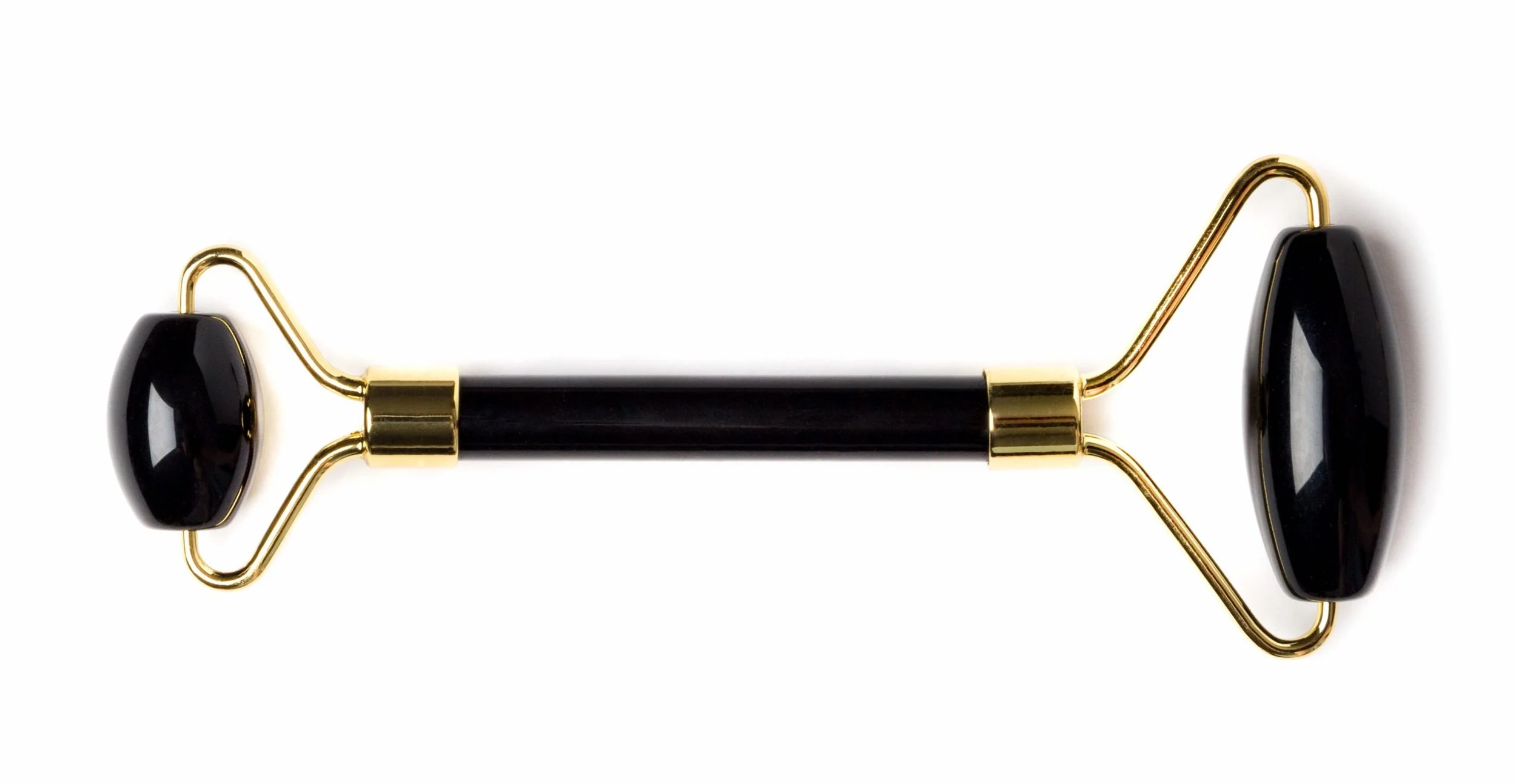
The roller makes it easier to apply consistent, pressure across the treated area, rather than concentrating pressure beneath individual fingertips.
Patients find the technique straightforward and easy to incorporate into their daily routine.
I should emphasise that this is my own clinical approach. Although massage is still widely recommended following Sculptra treatment, there is limited scientific evidence establishing the ideal massage technique or frequency.
Can Sculptra Nodules Be Completely Prevented?
Unfortunately, no medical procedure can be guaranteed to be free from side-effects.
Even with careful preparation, appropriate injection techniques and good aftercare, nodules can occasionally develop.
My experience has been encouraging, and it is consistent with the broader move towards greater dilution and more even product distribution.
For patients considering Sculptra, the important message is that nodule formation is now uncommon when treatment is performed using appropriate modern techniques.
Consider Your Next Step
A consultation is where every good treatment starts. There will no obligation to proceed. The aim is to provide information and clarity, not pressure to have a treatment. All our consultations and treatments are performed by our team of expert medical doctors.
To arrange a consultation please use the links below to telephone or email or to fill out our contact form click here.
References
Rowland-Warmann MJ., et al. Consensus Recommendations on the Diagnosis and Management of Noninflammatory and Inflammatory Nodules Secondary to Poly-L-Lactic Acid Injections.
Aesthet Surg J. 2026 Oct 17
Douglas C Wu, Mitchel P Goldman. The Efficacy of Massage in Reducing Nodule Formation After Poly-L-Lactic Acid Administration for Facial Volume Loss: A Randomized, Evaluator-Blinded Clinical Trial.
Dermatol Surg. 2016 Nov;42(11):1266-1272.