
What is the difference between Profhilo and Dermal Fillers?
Profhilo vs Dermal Fillers — Understanding the Difference
They are both hyaluronic acid injectables. They both improve the appearance of the face. Beyond that, they are doing entirely different things and understanding the difference is the most useful thing you can do before deciding which might be right for you.
The confusion is understandable
Profhilo and dermal fillers are both hyaluronic acid-based injectable treatments. It is entirely reasonable to wonder whether they are essentially the same thing with different branding.
They are not. The hyaluronic acid in Profhilo and the hyaluronic acid in a conventional dermal filler behave very differently in the tissue and they are designed to achieve entirely different clinical outcomes.
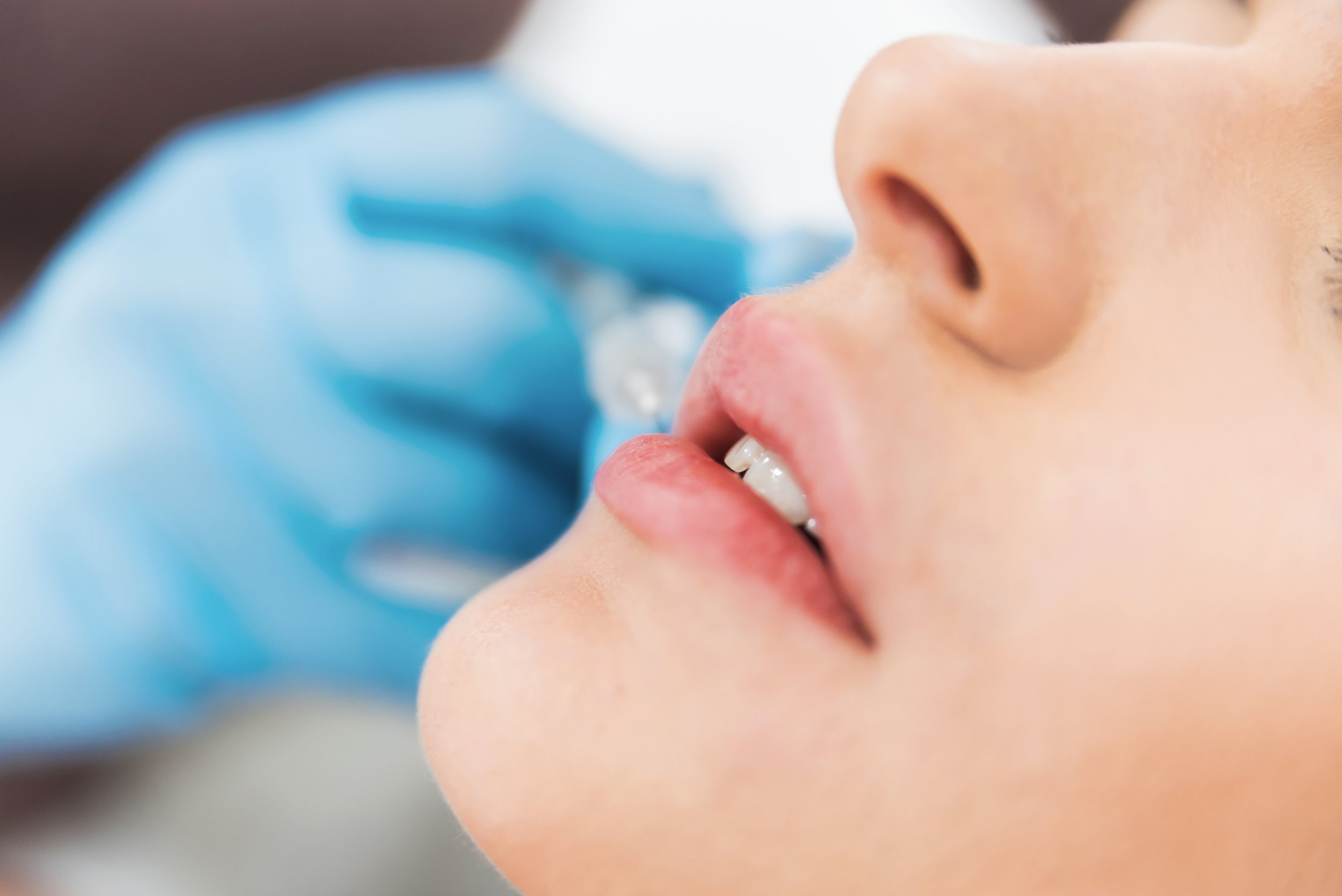
Profhilo and the hyaluronic acid in a conventional dermal filler behave very differently in the tissues
What dermal fillers do
Dermal fillers work by adding volume. A conventional hyaluronic acid filler is a crosslinked gel placed precisely in a specific location to restore or enhance volume such as hollowed cheeks, thinned lips, deepened nasolabial folds. The filler occupies physical space, providing immediate, localised correction visible from the moment of injection.
It does not significantly improve the quality of the overlying skin, and it does not stimulate meaningful collagen production in the surrounding tissue. It fills. That is its purpose, and it does it very well.
What Profhilo does
Profhilo contains a very high concentration of hyaluronic acid but is not cross-linked in the same way as a conventional filler. Rather than forming a firm gel that stays where it is placed, it flows through the tissue after injection, distributing itself across a wider area.
This produces a different biological effect. Rather than adding volume, Profhilo stimulates fibroblasts to produce new collagen and elastin throughout the treated tissue, while improving hydration at a depth topical skincare cannot reach.
The result is an improvement in overall skin quality, elasticity, firmness, luminosity, and vitality, rather than a localised volumetric correction. Read more about how Profhilo works.
Profhilo does not add volume. It improves the quality of what is already there.
The clinical distinction that matters
Volume loss, the depletion of facial fat compartments producing hollowing in the cheeks and temples requires a structural response. Dermal filler, placed with precision and restraint, is the appropriate tool.
Skin quality decline, thinning, loss of elasticity, reduced hydration, and diminishing vitality requires a different response. Profhilo addresses this directly in a way that conventional filler cannot. In relation to skin quality it is wort understanding the difference between Profhilo and Sculptra.
Many patients in their forties and fifties have both concerns simultaneously. In these patients the two treatments are not alternatives, they are complementary tools addressing different dimensions of the same ageing process, and a plan that includes both will almost always produce a more complete result than either achieves alone.
Which one do you actually need?
This is a clinical question rather than a patient preference question and it requires an assessment of your individual face. What we can say is this: if your primary concern is a specific area that looks hollow or lacking in definition, filler is likely the more appropriate tool.
If your concern is that your skin looks tired, less firm, or lacking in vitality, Profhilo is likely the better starting point. If both descriptions resonate both probably have a role. Which treatment might be right for you is best discussed at your consultation; arguably your most important first step.
A note on the treatment experience
Dermal filler is placed precisely in specific anatomical locations and produces an immediately visible result.
Profhilo is injected at five standardised points on each side of the face, from which it distributes through the surrounding tissue. Profhilo improvements develop gradually over four to eight weeks. This is worth understanding before treatment so that the timeline feels like progress rather than disappointment. Here we discuss how many Profhilo treatments you might need.
To find out more about Profhilo, dermal fillers, or to arrange a consultation, please visit our contact page or get in touch using the links below..