
Why restraint in Aesthetic Medicine is an important clinical skill
In aesthetic medicine there is often no medical necessity to intervene. That makes sound clinical judgement and restraint even more important, not less important.
Aesthetic medicine occupies an interesting place within medicine. We are rarely treating disease in the conventional sense. But medicine has never been concerned only with disease. It is concerned with the maintenance of both health and importantly, wellbeing.
People seek aesthetic treatment for many reasons. Something about their appearance may bother them, they may feel that their appearance no longer reflects how they feel, or they may simply want to look a little fresher.
A carefully considered treatment can sometimes make a meaningful difference to how someone feels about themselves. We look at this in more depth in can aesthetic treatment improve my sense of wellbeing?
More Treatment Doesn't Necessarily Mean a Better Result
Modern aesthetic medicine gives us an extraordinary range of possibilities. We can soften muscular activity, restore volume, stimulate collagen, improve skin quality and alter facial contours.
Technically, therefore, there may be many things that could be treated when somebody sits down in front of us. But a face is not a collection of individual problems waiting to be corrected.
Lines, folds, hollows and asymmetries are normal features of a human face. Some appear with ageing; others have been there for decades. Trying to eliminate every one of them does not necessarily make somebody look younger or better.
Indeed, it can achieve precisely the opposite. Good aesthetic treatment should preserve the characteristics that make somebody recognisably themselves. Read where we examine the shift towards subtle aesthetic treatments.
Restraint Starts With the Consultation
One of the most important questions I ask during a consultation is very simple “What bothers you?” The answer matters.
A patient may be concerned about one particular feature while I can see several other things that could technically be treated. That doesn't mean I should point them all out.
There is a significant difference between responding to someone's concern and creating new concerns for them. The consultation should therefore not become a process of inspecting a face and compiling a list of imperfections.
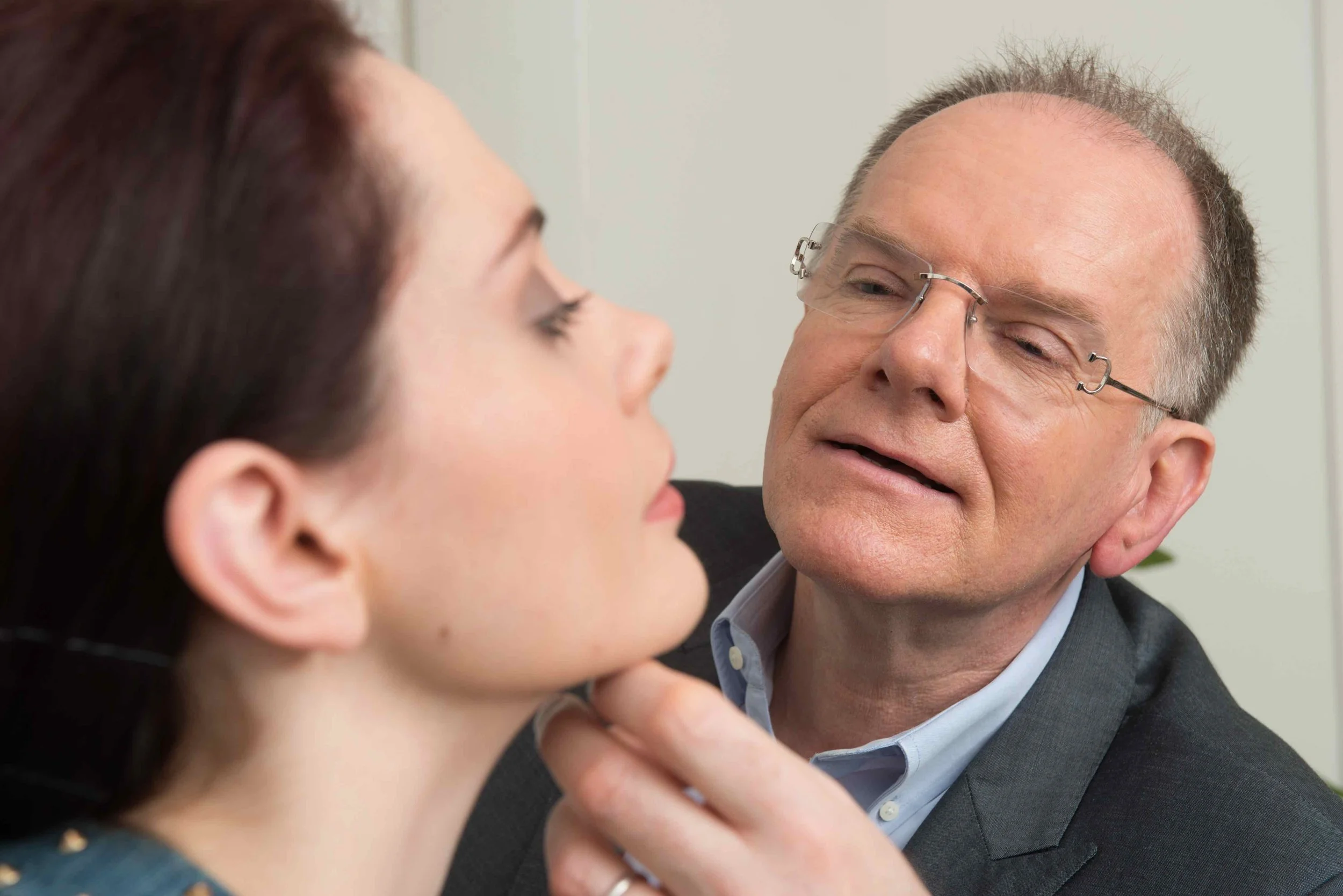
There is a significant difference between responding to someone's concern and creating new concerns for them.
The consultation should therefore not become a process of inspecting a face and compiling a list of imperfections.
Its purpose is to understand what the patient hopes to achieve, decide whether that expectation is realistic and then consider the smallest and safest intervention likely to achieve it.
Sometimes that means treating one area rather than three.
Sometimes it means using less product.
And sometimes it means recommending no treatment at all.
Read why your consultation matters more than your treatment.
Technical Skill and Clinical Judgement Are Not the Same Thing
Learning how to perform an injection is only part of learning aesthetic medicine.
The technically skilled practitioner knows what can be treated. The experienced practitioner knows what should be treated. You might be interested to read why good Botox isn't just about the injections.
That distinction becomes increasingly important as the number of available treatments and available practitioners grow.
A technically possible treatment may still be inappropriate for a particular face. The likely improvement may be too small to justify the risk. Another treatment may be more suitable. Or the patient's existing appearance may simply be better left alone.
Those decisions are not failures to treat. They are part of treatment. Consider reading how do I choose a safe aesthetic practitioner?
Why Over-treatment Can Happen Gradually
Over-treatment is not always the result of one dramatic procedure. It can happen slowly.
A patient has a treatment and likes the result. Months later they return and perhaps a little more is added. At another appointment another area is treated. Gradually both patient and practitioner become accustomed to the changing appearance.
What once looked unusual can begin to look normal. This is one reason why photographs taken before treatment can be so useful. They don't just document results. They provide perspective.
It is surprisingly easy to forget where you started.
Long-term aesthetic care therefore requires the ability to reassess rather than simply repeat what was done last time.
The right treatment three years ago is not automatically the right treatment today.
Ageing Is Not Something We Need to Erase
There is also a broader question about what aesthetic medicine is trying to achieve.
Ageing changes our faces. We lose some facial volume, skin changes, muscles continue to move and lines become more established. Treatment can soften some of those changes.
But trying to remove every visible sign of ageing is neither realistic nor, in my view, desirable. A face can look entirely appropriate for somebody's age and still look exceptionally good.
The objective should not necessarily be to make a 60-year-old look 40. It may simply be to help them look like a particularly well-rested, healthy and confident 60-year-old. Read the difference between looking younger and looking well.
That is a very different goal. And it usually requires less treatment, not more.
Knowing When to Stop
There is a point during many treatments when another small amount of product might produce another small change.
Recognising that point, and deciding not to pursue it, is part of the skill.
Perfect symmetry is rarely possible. Every line does not need to disappear. Every contour does not need to be enhanced.
Sometimes the tiny theoretical improvement gained by doing more is outweighed by the possibility of losing something natural.
Experience teaches you to become comfortable with leaving well alone.
Sometimes Saying No Is Part of Good Aesthetic Medicine
Occasionally a patient asks for something that I don't believe will benefit them.
That can make for a more difficult consultation than simply agreeing to perform the treatment.
But aesthetic medicine should not operate on the principle that if somebody is prepared to pay for a procedure, it should be performed.
There are times when I will suggest doing less than a patient initially requested. There are also occasions when I advise against treatment altogether.
That is not withholding treatment. It is medical judgement.
A practitioner should be prepared to say, “I don't think this will make you look better.” Patients deserve that advice.
The Art of Doing Less - Summary
Restraint in aesthetic medicine does not mean being timid about treatment.
Nor does it mean that very subtle treatment is always the correct treatment. Some patients need more substantial correction to achieve the result they are looking for. Restraint means knowing the difference.
It means treating the patient rather than following a formula. It means understanding what can realistically be improved, recognising what should be left alone and knowing when the desired result has already been achieved.
After many years in aesthetic medicine, I have become increasingly convinced that knowing how to perform treatments is only part of our job. Knowing when not to perform them matters just as much. Because sometimes the most skilful thing we can do is less.
Consider Your Next Step
A consultation is where every good treatment starts. There will no obligation to proceed. The aim is to provide information and clarity, not pressure to have a treatment. All our consultations and treatments are performed by our team of expert medical doctors.
To arrange a consultation please use the links below to telephone or email or to fill out our contact form click here.

About the author
Dr Peter Forrester is Medical Director of The Cosmetic Doctors Company in Esher, Surrey. He has practised aesthetic medicine for over 25 years and has extensive experience in non-surgical facial rejuvenation. He believes that all good aesthetic treatment begins with a thorough consultation, straightforward advice and a commitment to providing safe, natural-looking results for every patient.