
How Long Do Dermal Fillers Last?
The Question Every Patient Asks: How Long Do Dermal Fillers Last?
Dermal fillers are not permanent, and understanding how long results last is an important part of setting realistic expectations.
The duration of effect varies between individuals and depends on several factors, including the type of filler used and Howard where it is used.
Typical Duration of Results
Most dermal fillers last between several months and over a year.
As a general guide:
Some areas may retain results for 6–9 months
Others may last 12 months or longer
The effect gradually reduces rather than disappearing suddenly
This gradual change allows for a more natural transition over time.
Why Do Dermal Fillers Wear Off?

Hyaluronic Acid dermal fillers are not permanent, and understanding why helps set realistic expectations from the outset.
Most modern fillers are made from hyaluronic acid — a substance that occurs naturally in the body and is therefore gradually broken down by the body's own enzymes over time. The rate at which this happens varies between individuals, influenced by factors including metabolism, lifestyle, the area treated, and the product used.
This is not a flaw in the treatment — it is by design. The temporary nature of hyaluronic acid fillers is precisely what makes them safe, adjustable, and reversible. It is one of the reasons they have become the gold standard in aesthetic medicine.
Hence wearing off involves:
Slow degradation of the product
Gradual return of previous volume patterns
Subtle changes rather than abrupt loss of effect
Understanding what dermal fillers are and how they work helps explain why this occurs.
Does the Treatment Area Matter?
Yes, different areas of the face behave differently.
In general:
Areas of high movement, such as the lips and the lines around the mouth, tend to break down filler more quickly than areas of relative stillness. The constant activity of speaking, eating, and expression accelerates the metabolic process in these zones, meaning treatment may last six months or less
In contrast, areas such as the cheeks, temples, or jawline which move considerably less tend to retain correction for considerably longer, often twelve months or more. This is one of the reasons a tailored maintenance plan, rather than a fixed schedule, makes more clinical sense. The right interval between treatments depends as much on where you have been treated as anything else.
Finer, more superficial line treatments may have shorter duration
This is why treatment planning is individualised rather than standardised.
Do Fillers Last Longer Over Time with Repeated Treatments?
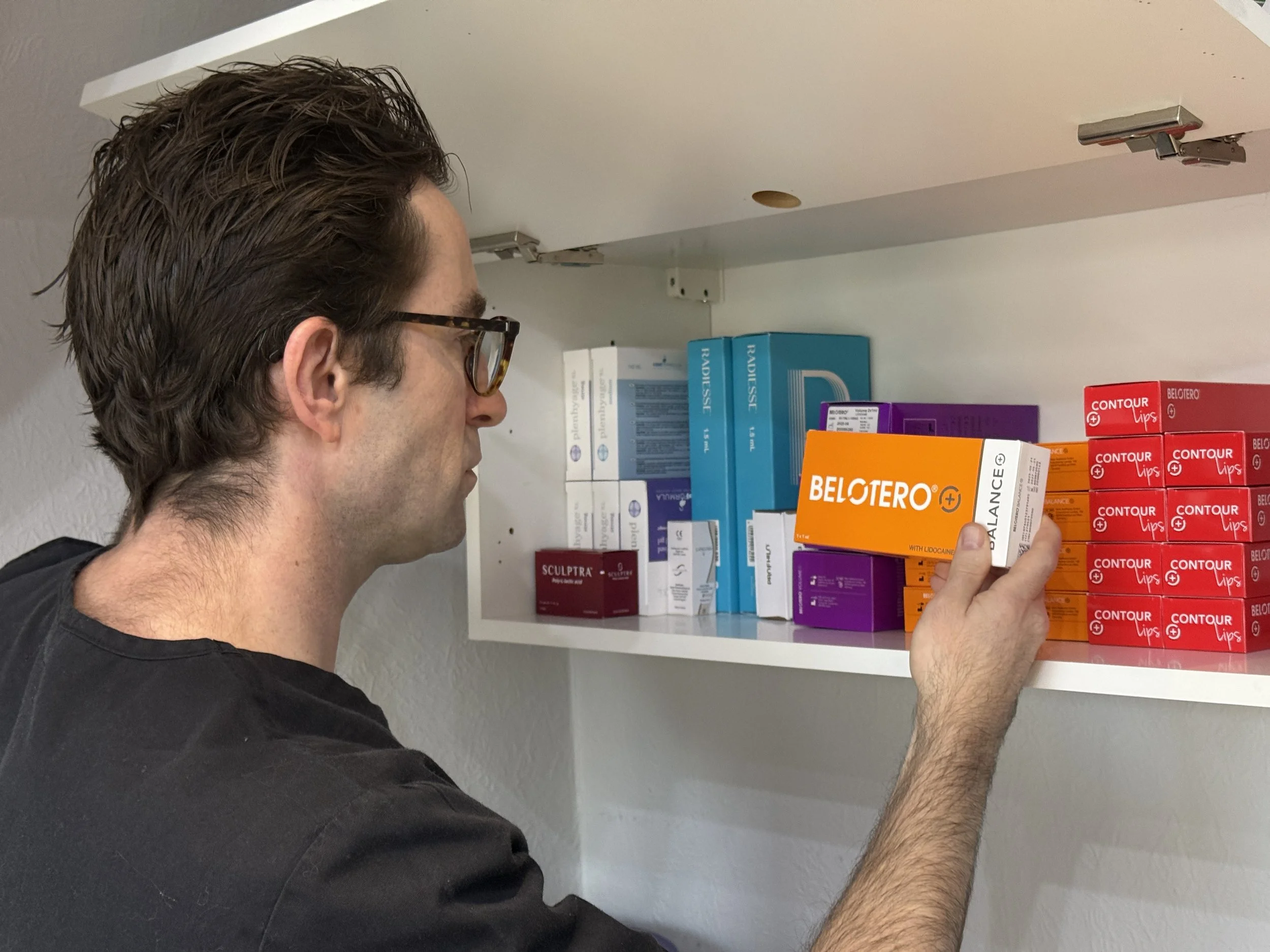
There is good evidence to suggest that with consistent, well-managed treatment over time, results can become more sustained.
This is partly because hyaluronic acid fillers have a hydrating and tissue-supporting effect that accumulates with repeated use, and partly because maintaining correction gradually — rather than allowing significant deterioration between appointments — means less product is needed at each visit to achieve the same result.
Patients who attend regularly and treat proactively tend to need smaller volumes than those who wait until correction has been largely lost. Over time, this approach is both more effective and more economical.
However, this varies and should not be assumed.
What Happens as Fillers Wear Off?
As filler gradually breaks down, the effects of treatment quietly diminish rather than disappearing abruptly. Most patients notice a slow and gentle return towards their pre-treatment appearance over a period of months — a gradual softening of the correction rather than a sudden change.
Importantly, well-placed filler does not leave the face looking worse than it did before treatment. The skin and tissue return to their natural state.
Occasionally patients worry that things will look strange or uneven as filler fades — in our experience, when treatment has been appropriately placed and correctly dosed, the skin does not become “worse” as a result of treatment wearing off — it simply returns to its natural baseline.
When Should Treatment Be Repeated?
There is no fixed schedule for repeat treatment.
Some patients choose:
Regular maintenance for consistent results
Occasional treatment depending on preference
The appropriate timing depends on:
Individual goals
Response to previous treatment
Clinical assessment
This is best discussed during consultation, as outlined in why a consultation matters more than the treatment.
Avoiding Over-Treatment
More frequent treatment does not necessarily lead to better results.
Over-treatment can:
Affect natural proportions
Lead to an unnatural appearance
A balanced approach, with appropriate intervals between treatments, is key to maintaining natural results.
Understanding filler treatment safety and risks helps support informed decisions.
Conclusion: Gradual Change and Individual Variation
Dermal fillers are designed to provide temporary, gradually changing results.
While most treatments last many months, duration varies depending on the individual and the area treated.
A considered approach to timing and maintenance helps ensure results remain:
Natural
Balanced
Appropriate to the individual
Find our more about Dermal Fillers
Summary - Frequently Asked Questions - FAQ’s - Quick Fire Answers
-
Description text goes hereMost dermal fillers last between six and eighteen months, depending on the product used, the area treated, and individual factors such as metabolism and lifestyle. High-movement areas like the lips tend to break down more quickly, while areas of less activity such as the cheeks or jawline typically retain correction for longer. Regular maintenance appointments help sustain results over time.
-
Yes, generally. The lips are one of the highest-movement areas of the face — constantly active in speaking, eating, and expression. This accelerates the breakdown of hyaluronic acid, meaning lip filler typically lasts between four and six months. Most patients find they need more frequent maintenance in this area than elsewhere on the face.
-
No — and this is a concern we hear often. As filler gradually breaks down, the face returns quietly to its pre-treatment appearance. It does not look worse than before. Well-placed, correctly dosed filler leaves no lasting distortion as it fades. The change is gradual and natural, not sudden or dramatic.
-
Yes, there is good evidence for this. Consistent treatment over time has a cumulative supportive effect on the tissue, and maintaining correction gradually means less product is needed at each visit. Patients who treat proactively and regularly tend to achieve better, more sustained results than those who wait until correction has largely worn off.
-
The honest answer is when you feel you need it — and ideally before correction has been entirely lost. Topping up while some filler remains tends to produce better results and requires less product. Your practitioner should be able to advise on a realistic maintenance interval based on the area treated and how your body responds.
-
Most patients find dermal filler treatment very manageable. A topical anaesthetic is applied beforehand, and most modern filler products contain lidocaine — a local anaesthetic — within the formula itself, which significantly reduces discomfort during treatment. Some areas are more sensitive than others, but the procedure is generally well tolerated and over quickly.
-
When administered by a qualified, experienced practitioner, dermal fillers have a strong safety record. As with any medical procedure, risks exist and should be discussed fully before treatment. Choosing a properly trained and regulated practitioner is the single most important factor in ensuring a safe outcome — not the product alone.
-
Hyaluronic acid fillers can be dissolved using an enzyme called hyaluronidase, which breaks down the filler quickly and safely. This is one of the reasons hyaluronic acid remains the preferred choice for most practitioners — the knowledge that treatment is reversible if needed provides an important clinical safety net for both patient and practitioner.
If You Are Considering treatment
A consultation allows you to explore your concerns and make a fully informed decision without pressure.
You can read why your consultation matters more than the treatment.
Arrange a consultation
To make a booking with one of our doctors please use the links below to telephone or email or to fill out our contact form click here.