
Are Dermal Fillers Safe? Part I - Risks, Complications and Expert Guidance
Introduction
Dermal fillers are one of the most performed aesthetic treatments worldwide. When carried out appropriately, they can deliver subtle, natural-looking results.
However, like all medical procedures, they are not without risk.
Understanding what those risks are — and how they are minimised — is essential for anyone considering treatment.
What Are Dermal Fillers Made Of ?
Most modern dermal fillers are based on hyaluronic acid, a substance naturally found in the body.
This contributes to their:
Compatibility with human tissue
Temporary and adjustable nature
Ability to be dissolved if required

Most modern dermal fillers are based on hyaluronic acid, a substance naturally found in the body.
These characteristics are part of what underpins their overall safety profile.
Are Dermal Fillers Safe?
In experienced medical hands, dermal fillers have a strong safety record.
However, safety depends less on the product itself and more on:
Practitioner expertise
Knowledge of facial anatomy
Injection technique
Patient selection
This is why knowing that Your Consultation Matters More Than Your Treatment is essential.
Understanding the Real Risks
While most treatments proceed without issue, patients should be aware of potential complications. Categorising them into mild, less common, and rare is useful.
Common (and usually mild):
Swelling
Bruising
Tenderness
Temporary asymmetry
Less common:
Infection
Lumps or irregularities
Rare but serious:
Vascular occlusion (blocked blood vessel)
Tissue damage if untreated
A responsible practitioner will always explain these risks clearly.
Why Practitioner Skill Is Critical
Dermal filler treatment requires detailed knowledge of:
Facial vascular anatomy
Depth and placement techniques
Product behaviour within tissue
The difference between a safe, natural result and a complication often lies in the practitioner’s training and judgement — not the filler itself.
Can Dermal Fillers Be Reversed?
One of the key safety advantages of hyaluronic acid fillers is that they can be dissolved using an enzyme called hyaluronidase (sometimes known by the name of the original commercial preparation - Hyalase
This allows:
Adjustment of results
Correction of complications
An additional safety layer when needed
However, this should not be seen as a substitute for careful treatment planning.
Avoiding Over-Treatment
Safety is not only about avoiding complications — it is also about achieving balanced, natural outcomes.
Excessive filler can:
Distort facial proportions
Affect movement
Lead to an unnatural appearance
This is why our approach focused on The Shift Towards Subtle Aesthetic Treatments is closely linked to safer outcomes.
The Role of a Consultation
A proper consultation ensures:
You are a suitable candidate
The correct areas are treated
Realistic expectations are set
Risks are fully understood
Patients seeking A Natural, Subtle Result often benefit most from a conservative, staged approach.
Choosing the Right Practitioner
If there is one factor that most influences safety, it is practitioner choice.
Look for:
Medical qualifications
Experience in facial aesthetics
A conservative, patient-focused approach
Willingness to advise against unnecessary treatment
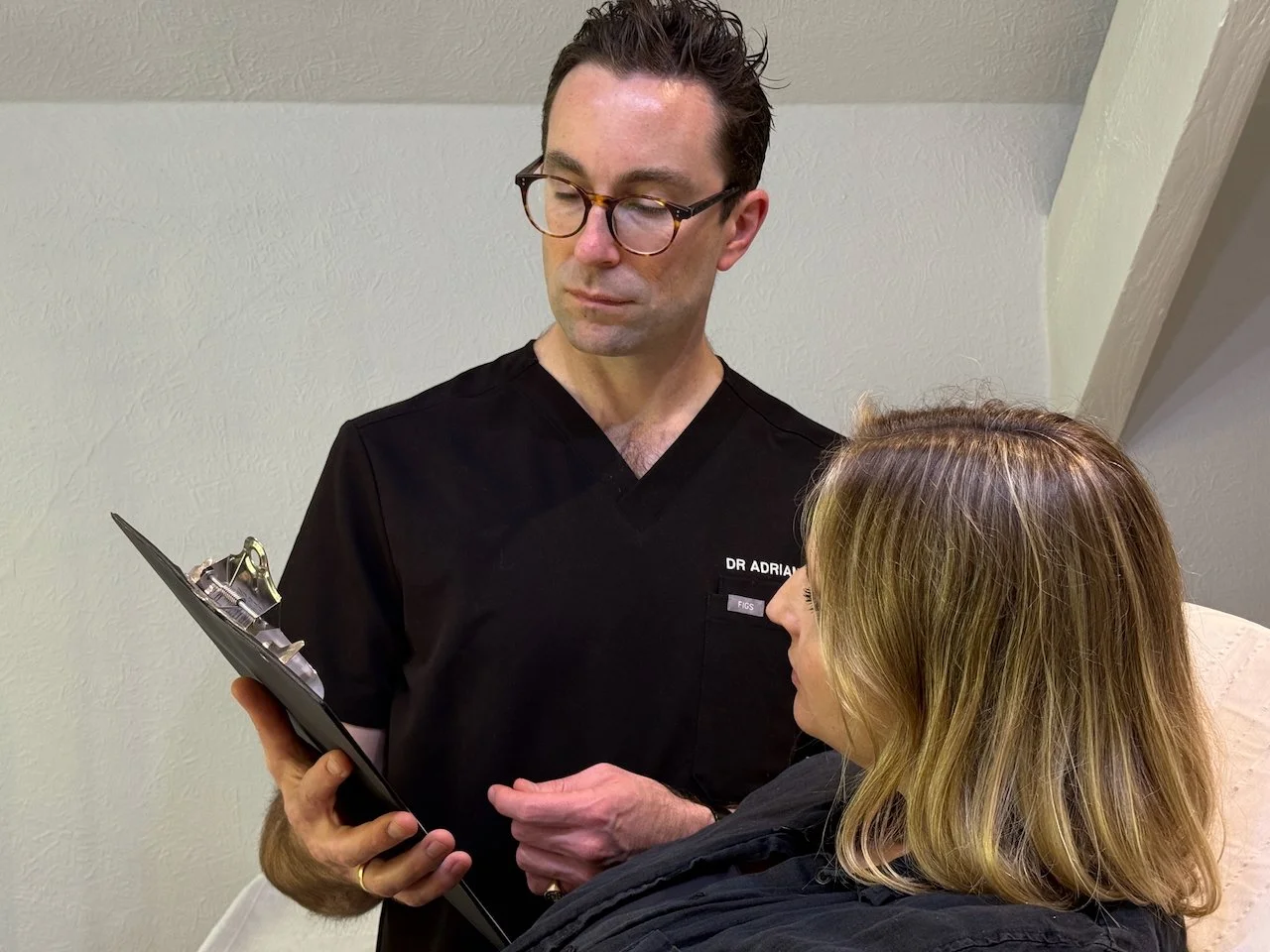
A consultation should feel thorough — not rushed.
For some more detail see How to Choose a Safe Aesthetic Practitioner.
Consider reading our article The Regulation of UK Aesthetic Medicine: Why Are Patients Still Waiting?
Putting Risk Into Perspective
While serious complications are rare, they are widely discussed online, which can make them seem more common than they are.
Balanced information is key.
For a broader overview of risks across all treatments, see Aesthetic Treatment Safety: Risks, Myths and What Patients Should Know
Conclusion: Safe Treatment Is Planned, Not Assumed
Dermal fillers can be both safe and effective when performed correctly.
The key lies in:
Careful assessment
Skilled technique
Conservative planning
Ongoing care
For a deeper examination of vascular occlusion — the most serious complication associated with filler treatment — Vascular Occlusion and Why the Practitioner Makes All the Difference
Considering treatment ?
A consultation allows you to explore your concerns and make a fully informed decision without pressure.
You can read more about what happens during an initial consultation.
Arrange a consultation
To make a booking with one of our doctors please use the links below to telephone or email or to fill out our contact form click here.