
Is Juläine Really Better Than Sculptra?
Looking Beyond the Marketing - What Does the Evidence Really Show?
Every so often yet another new injectable treatment arrives promising improved technology, better results and a fresh approach to facial rejuvenation.
The latest is Juläine, a new Poly-L-lactic acid (PLLA) collagen stimulator that is generating considerable interest within aesthetic medicine and social media.
Its manufacturers describe it as a next-generation product with smoother, more uniform microspheres, easier preparation and potentially fewer treatment-related issues. It certainly sounds impressive.
But does that necessarily mean it produces better results than established products such as Sculptra or Lanluma?
As with many new developments in aesthetic medicine, the answer is more nuanced than the marketing might suggest.
We address this theme in why does every new treatment start as a miracle?
What do these products have in common?

Sculptra, Lanluma and Juläine all belong to the same PLLA family of collagen stimulating treatments.
Rather than acting as traditional dermal fillers, they work by stimulating your own collagen production over a period of weeks and months. Improvements appear gradually and continue to develop long after the treatment itself.
In experienced hands, PLLA treatments can subtly restore facial volume, improve skin quality and soften the visible effects of collagen loss while maintaining natural-looking results, lasting up to and sometimes beyond two years.
For more about Sculptra see our Sculptra Treatment Page.
What makes Juläine different?
Juläine is not simply a rebadged version of Sculptra. It has genuine engineering differences.
Its PLLA microspheres are reported to be smoother, more uniform and generally slightly smaller than those used in older PLLA products. Laboratory studies also suggest that it reconstitutes more quickly, forms a more homogeneous suspension and produces fewer visible clumps during preparation.
These appear to be genuine engineering improvements. Whether they translate into meaningfully better results remains the important unanswered question.
From a doctor's perspective, they may make the product easier and more predictable to prepare and administer. However, this raises an important question.
Does better engineering automatically produce better results?
Not necessarily. A product can be easier to prepare without producing better long-term outcomes for patients.
This distinction is important because many of the current claims surrounding Juläine relate to its physical properties rather than demonstrated superior results.
At present there is very little published evidence showing that Juläine:
stimulates more collagen than Sculptra;
produces longer-lasting results;
gives higher patient satisfaction;
causes fewer granulomas or nodules;
or consistently produces better aesthetic outcomes.
Those advantages are certainly possible. They simply have not yet been convincingly demonstrated in comparative clinical studies.
What does the science currently tell us about Juläine?
At the time of writing, the evidence can probably be summarised as follows:
Questions → Current evidence:
Is Juläine easier to prepare? → Probably yes
Does it produce a more uniform suspension? → Laboratory evidence suggests yes.
Does it stimulate more collagen? → Unknown.
Does it last longer? → Unknown.
Does it produce better results than Sculptra? → Unknown. No comparative clinical evidence currently demonstrates this.
Does it produce fewer granulomas? → Unknown. A reasonable hypothesis, but not yet proven.
This does not mean Juläine is not an improvement. It simply means that the clinical evidence has not yet caught up with the promotional enthusiasm.
Does Juläine require less massage after treatment?
This area is surprisingly confused. Numerous clinics advertise Juläine as requiring no massage. However others advise either:
delayed massage;
three minutes, three times daily for three days;
or the traditional five minutes, five times daily for five days.
Published clinic protocols are therefore inconsistent. That inconsistency suggests the “no massage required” message is not yet supported by a universally agreed clinical standard. Indeed, the product information supplied with each pack of Julaine still recommends the 5-5-5 rule.
Granuloma/nodule rates with contemporary Sculptra technique are already low. To demonstrate superiority, Juläine would require a fairly large comparative trial with prolonged follow-up, because delayed nodules are uncommon and may appear months later.
Our rethinking the 5-5-5 massage rule
Anyone familiar with Sculptra will probably have heard of the traditional 5-5-5 mantra. Massage for five minutes, five times a day, for five days. It has become part of Sculptra folklore.
Over time, however, I have modified our own aftercare instructions.
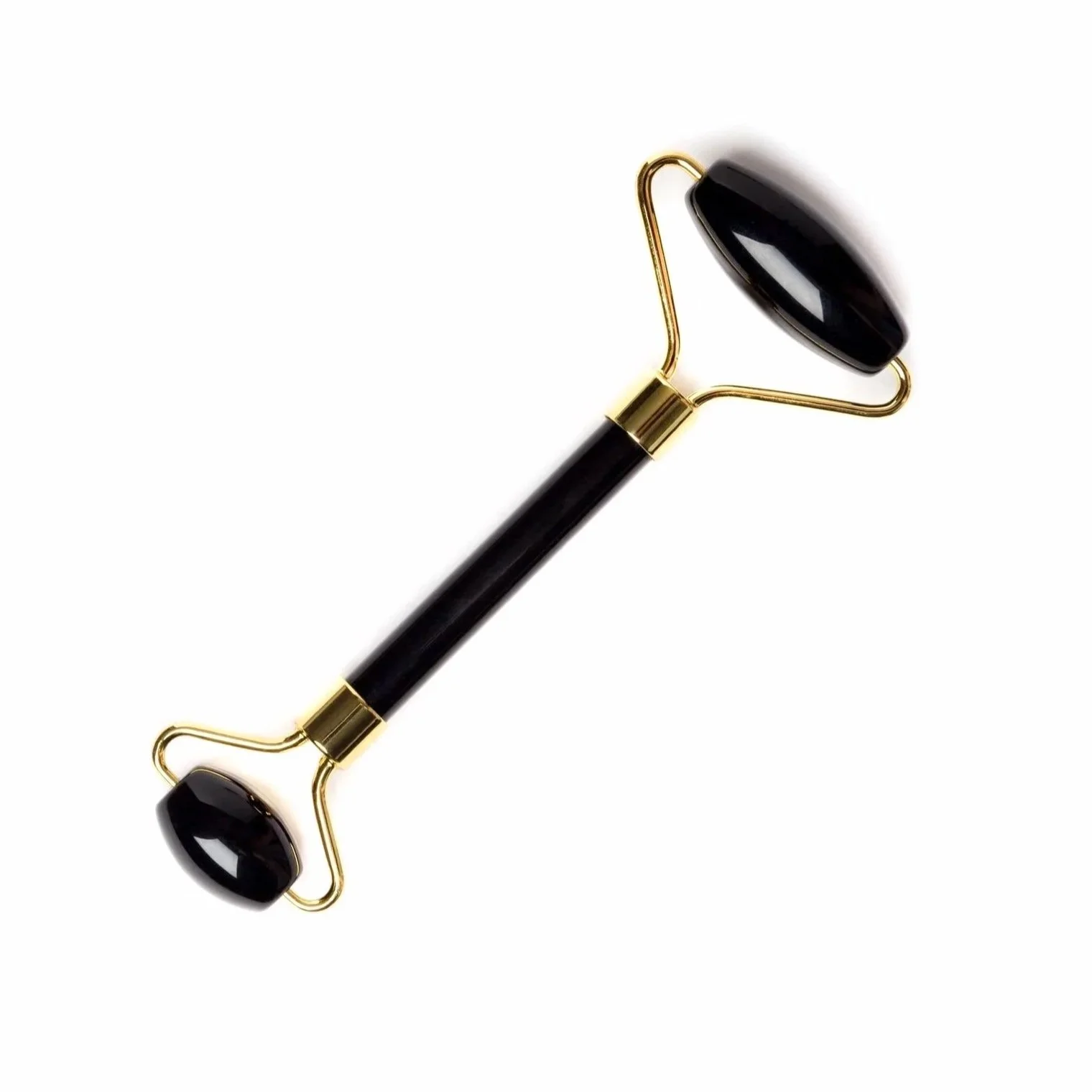
Rather than relying on fingertip massage, we supply every Sculptra patient with a facial roller, similar to those now widely available for home skincare.
I ask patients to gently roll the treated areas for approximately two minutes each morning and evening for seven days. My reasoning is straightforward.
A roller applies gentle, even pressure over the treated areas and is, I believe, more likely to produce consistent massage than using the fingertips of the 5-5-5 protocol.
This is my personal clinical preference rather than evidence-based guidance. However, using our roller protocol, we have not seen a single granuloma in our practice during the past eight months.
Whether that is due to the roller, modern injection technique, careful patient selection or simply good fortune, I cannot say with certainty.
Medicine rarely allows such simple conclusions.
My own experience with Sculptra
Sculptra was first introduced 25 years ago and promoted as a dermal filler. However it position was rapidly displaced by the introduction of hyaluronic dermal fillers. Recent interest in regenerative medicine has shone the spotlight on Sculptra again, largely because of its significant ability to stimulate production of the skin’s own collagen. Read Sculptra — why this 25-Year-old treatment is finally having its moment.
Having started using Sculptra again in late 2025 I have become increasingly impressed by the results it can achieve and it has now an established place in our treatment options.
Like many doctors, I initially found the preparation a little cumbersome. Compared with newer PLLA products, reconstitution is undeniably more of a faff.
But with practice, I no longer regard this as an important disadvantage. Once you become familiar with the product, the extra preparation simply becomes part of the treatment process rather than something that influences the clinical outcome.
Early on, I did experience blockage of cannulas during treatment. I had been using excellent quality cannulas, but after changing to a different design on the recommendation of a colleague, the problem has disappeared in my own practice.
It was a useful reminder that successful treatment depends not only on the product itself but also on technique, preparation and equipment.
A patient's perspective - being on the other end of the needle.
I have always believed that it is valuable to understand treatments from both sides of the consultation. As a doctor, I believe a way to understand what a patient experiences is to try it for myself. Over the past 25 years I have at one time or another tried most treatments that we offer.
So earlier this year I underwent a course of three Sculptra treatments myself.
Experiencing the gradual changes first-hand has reinforced my confidence in the treatment and, perhaps more importantly, has given me a better appreciation of what patients notice as the collagen develops over the months following treatment. It’s a personal opinion but on my 73yr old face Sculptra is a definite winner.
Will Juläine eventually prove to be an advance over Sculptra?
It may well do. The improvements in design are certainly interesting and deserve further study.
For now however, I remain increasingly impressed with the results I am achieving with Sculptra. It is a treatment I know well, trust and continue to use with confidence. Sculptra is backed by over 20 years of use over many countries and demographics.
If future evidence demonstrates that another PLLA product consistently delivers better outcomes for my patients, I shall happily change my practice.
New treatments deserve open minds—but they also deserve the patience required to prove themselves. That is how medicine should progress.
Your Next Step
A consultation is where all good treatment begins. There will no obligation to proceed. The aim is to provide information and clarity, not pressure to have a treatment. All our consultations and treatments are performed by our team of expert medical doctors.
To arrange a consultation please use the links below to telephone or email or to fill out our contact form click here.

References
1. Urdiales-Gálvez F, Benítez PA, Díaz I. Clinical Outcomes of an Innovative Poly-L-Lactic Acid (LASYNPRO) in Facial Rejuvenation: Prospective, Multicenter Spanish Study. Journal of Cosmetic Dermatology. 2026;25(2) https://pubmed.ncbi.nlm.nih.gov/41715284/
2. Bertossi D, Camporese A, Kefalas N, et al. Post-Market Observational Study of Injectable PLLA Microspheres for Facial Rejuvenation. Clinical, Cosmetic and Investigational Dermatology. 2026;19 https://pubmed.ncbi.nlm.nih.gov/42153037/