
Sculptra — Why this 25-Year-Old Treatment Is Finally Having Its Moment
Introduction
Sculptra has been available as an aesthetic treatment since 1999. That makes it one of the longest-established injectable products in the field — older than most of the hyaluronic acid fillers that came to dominate aesthetic medicine over the following two decades.
And yet for much of its history, Sculptra occupied a relatively quiet corner of aesthetic practice. Used by some, respected by those who knew it well, but never quite mainstream.
That is now changing and in our view, for very good reasons.
Where did Sculptra come from?
Sculptra is composed of poly-L-lactic acid, a synthetic, biocompatible, biodegradable polymer used in medicine for decades including in dissolvable surgical stitches. It was first approved for aesthetic use in Europe in 1999, initially to treat facial fat loss in HIV patients — the severe, visible fat loss caused by the early antiretroviral medications.
That origin matters. It was developed to address a medical need, and the clinical experience gained over many years in large numbers of patients established a safety and efficacy record that underpinned its later expansion into cosmetic aesthetics.
Dr Forrester had a brief early experience with Sculptra around fifteen years ago. He says “I never saw the nodule complications that some practitioners reported, but at the time hyaluronic acid fillers were rapidly becoming the dominant choice — more immediate in their results and straightforward to use. Like many others, I moved with that tide. Returning to Sculptra now, I am struck by how well its underlying philosophy aligns with where aesthetic medicine has arrived.”
Why the sudden interest and increasing popularity ?
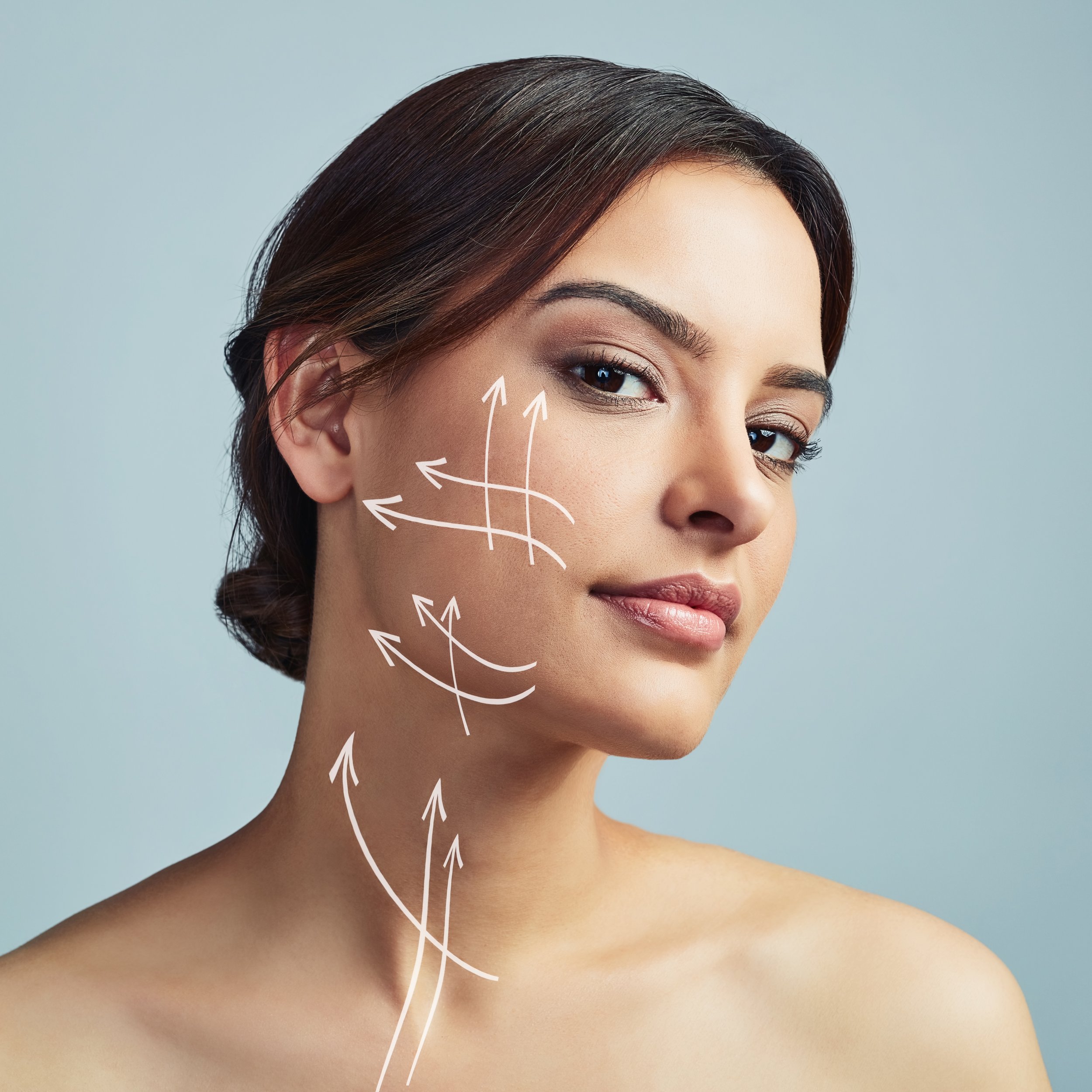
The most important reason for Sculptra's revival is not a change in the product; it is a change in what patients want and how the best practitioners think about their work.
There has been a profound shift away from obvious volumisation and towards subtlety, refinement, and skin quality. Patients no longer want to look different. They want to look like themselves, rested, refreshed, and well. Read The Shift Towards Subtle Aesthetic Treatments — Why Less Is Now More
This is precisely what Sculptra was designed to deliver.
Unlike conventional hyaluronic acid fillers, which replace lost volume by filling space with a gel, Sculptra works by stimulating the body's own fibroblasts to produce new collagen and elastin, gradually rebuilding the structural framework of the face from within. Results develop over weeks to months, look entirely natural because the tissue produced is the patient's own, and last considerably longer than conventional fillers, typically up to two years. Sculptra can cause tightening of sagging facial tissues - something that hyaluronic fillers can only do by increasing volume.
Sculptra, it turns out, was ahead of its time. The rest of the field has simply caught up.
The Science
Recent research has shown that Sculptra stimulates a broader range of tissue remodelling pathways than was previously understood, and does so while inducing less inflammation than other biostimulatory agents. Its effects extend beyond collagen to include elastin regeneration and adipocyte stimulation — which helps explain its effectiveness in restoring the structural volume lost with facial ageing. To see how it compares to Profhilo, another regenerative treatment Sculptra vs Profhilo: Which Treatment Is Right for You?.
For a fuller explanation of the science behind biostimulatory treatments, including Sculptra's mechanism of action see our post on Biostimulation in Aesthetic Medicine
What About Nodules?
It would be dishonest to discuss Sculptra's history without addressing the nodule concern directly because it was real enough to deter many practitioners, and it is one of the main reasons Sculptra never achieved the widespread adoption it deserved.
The nodule risk was predominantly a problem of technique rather than product. Earlier protocols used more concentrated preparations and relied heavily on finger massage. Modern protocols use significantly higher dilution, which distributes particles far more evenly. The use of cannulas rather than needles allows wider, more even distribution in a single pass. In my practice I also provide patients with a facial roller, which we find gives a firmer, more even pressure than finger massage and with that approach find massage twice daily for five days entirely adequate.
Our honest opinion: Sculptra with modern technique is a meaningfully different clinical experience from the Sculptra of fifteen years ago. The nodule concern, while historically valid, should not colour current decisions.
How We Now Use It
At the Cosmetic Doctors Company we use Sculptra primarily for face and neck rejuvenation — addressing laxity, some volume loss, and overall skin quality.
See our Sculptra treatment page. It rarely stands alone. For most patients it forms part of a broader plan that may include conservative use of hyaluronic acid fillers, wrinkle-relaxing injections, or other biostimulatory treatments such as Profhilo or polynucleotides.
The results are gradual, which requires clear communication at consultation. But the outcomes — natural, long-lasting, and rooted in the patient's own biology — are precisely what modern aesthetic medicine should be delivering.
Conclusion
Sculptra's revival is the logical consequence of a maturing field finally aligning with what this treatment was always designed to do. A product ahead of its time in 1999, temporarily overshadowed, and unfairly burdened by a nodule reputation that modern technique has largely resolved, now sits exactly where it belongs — at the centre of regenerative aesthetic practice. Read questions people often ask about Sculptra.
If you are considering a treatment
If you are considering treatment, a consultation is your appropriate first step, allowing you to make a fully informed decision without any pressure.
Find out What Happens at Your First Aesthetic Consultation.
All our treatments are performed by our medically qualified doctors, who bring both clinical expertise and genuine aesthetic judgement to every consultation.
To Book a Consultation
If you would like to explore any of our curated range of services, we would be pleased to arrange a consultation. At the Cosmetic Doctors Company your consultation and any subsequent treatment will always be with one of our expert, medically qualified doctors.
To make a booking with one of our doctors please use the links below to telephone or email or to fill out our contact form click here.