
Why Do GPs Make Good Aesthetic Doctors?
Read about Dr Adrian Mylne, at our Clinic in Esher, Surrey.
The skills that make a good general practitioner turn out to be remarkably well suited to aesthetic medicine. Here is why.
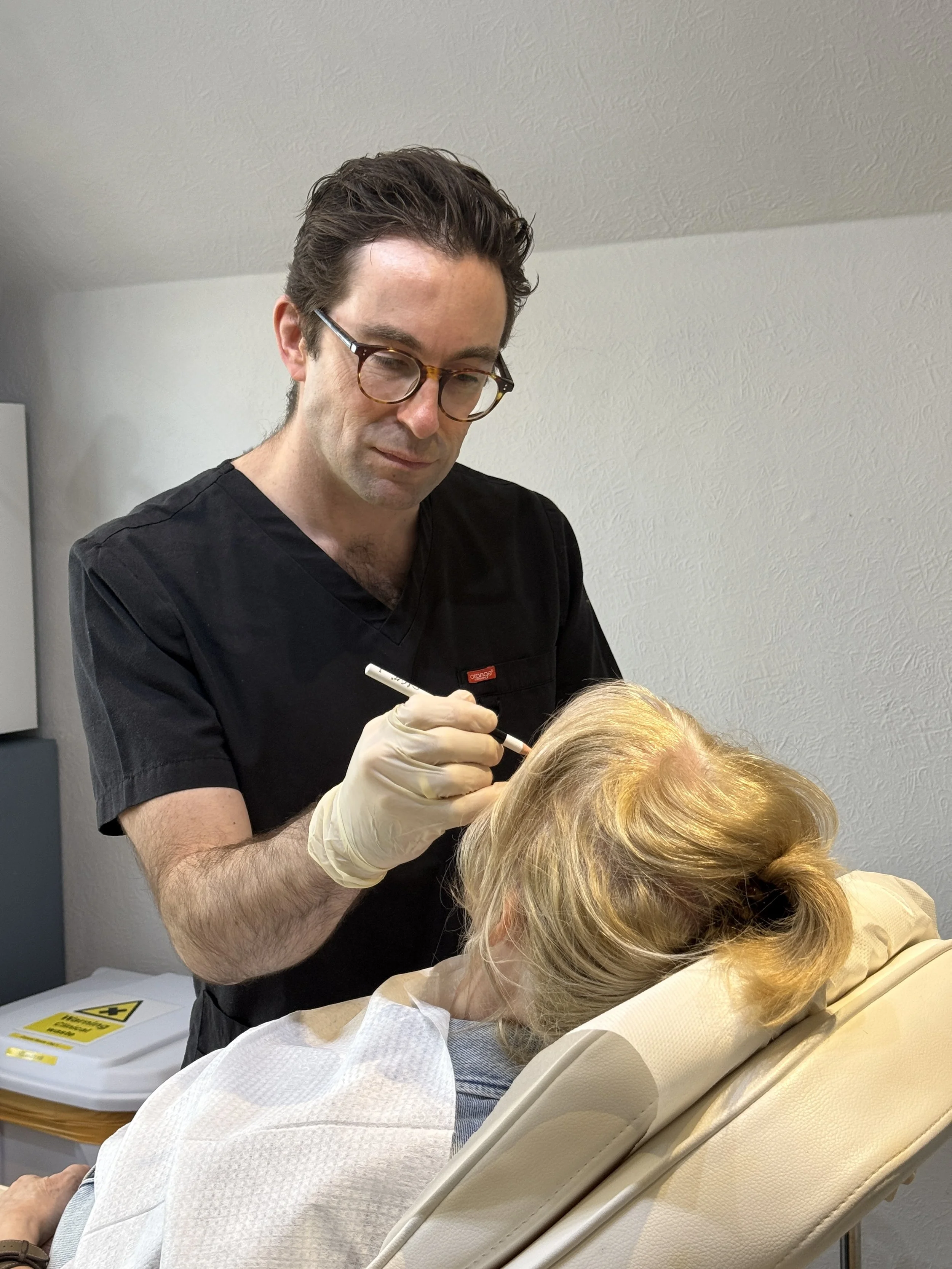
A patient considering aesthetic treatment for the first time is often nervous, uncertain about what to ask, and unclear about what to expect. The GP's instinct — to slow down, to explore, to make the patient feel heard before moving to any clinical recommendation — is precisely what that patient needs. The aesthetic consultation is, in many respects, a general practice consultation with a different presenting concern.
A breadth of training that matters
General practice is, by its nature, a discipline of breadth. A GP sees everything — acute illness, chronic disease, mental health, minor surgery, paediatrics, geriatrics, and the full complexity of patients who present not as a collection of symptoms but as whole people with whole lives. That breadth of clinical experience produces a particular kind of doctor: one who is comfortable with uncertainty, skilled at listening, trained to consider the whole patient rather than the presenting complaint, and experienced in making decisions under conditions that are rarely as clear-cut as a textbook suggests.
These are, it turns out, exactly the skills that distinguish good aesthetic practice from merely competent treatment delivery.
The consultation skills that transfer directly
A GP's training places the consultation at the centre of everything. The ability to take a thorough history, to listen carefully to what a patient is saying and what lies beneath it, to build trust quickly, and to communicate complex information clearly and without jargon — these are the foundations of general medical practice. They are also the foundations of an aesthetic consultation done well.
Dr Adrian Mylne and his clinical safety framework
Dr Adrian Mylne is trained to recognise when something is outside his scope and to refer accordingly. He is trained in risk assessment, in the management of adverse events, and in the kind of clinical judgement that distinguishes a situation requiring urgent action from one that can be monitored. He carries mandatory professional indemnity insurance, is registered with the GMC, and is bound by a code of medical ethics that governs every clinical encounter regardless of context.
In a field where the consequences of getting things wrong can be significant — vascular occlusion, infection, allergic reaction — the GP's clinical safety framework is not a background detail. It is a genuine and meaningful protection for the patient.
The whole-patient perspective
Perhaps the most valuable contribution a GP background brings to aesthetic practice is the instinct to see the whole patient. A GP assessing a patient for aesthetic treatment does not see a set of concerns to be corrected. They see a person — with a medical history, medications that may affect treatment, potential contraindications, and a psychological context that matters as much as the clinical picture.
That whole-patient perspective shapes every recommendation. It is the difference between a practitioner who responds to what a patient asks for and one who considers what genuinely serves them — which is, in the end, what good medicine has always looked like.
At the Cosmetic Doctors Company in Esher, Surrey
Dr Adrian Mylne brings exactly this background to his aesthetic practice. Trained as a GP, he combines the breadth of clinical experience, the consultation skills, and the patient-centred approach that general practice develops — with a genuine interest in and commitment to aesthetic medicine delivered to the highest medical standards.
If you would like to arrange a consultation with Dr Mylne, please visit our contact page or get in touch use the links below to email or telephone.