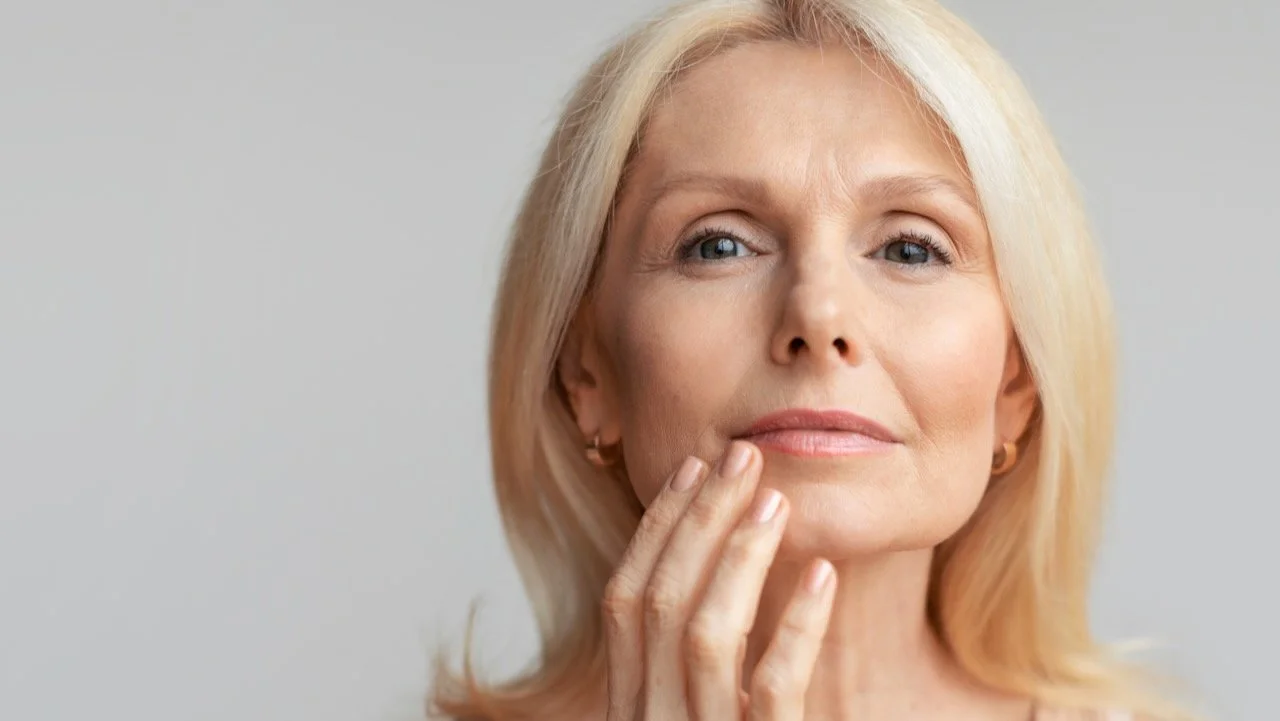
Approaching 50 — What Is Actually Happening to Your Face, and How Should You Think About It?

The late forties are a genuinely significant moment in the biology of facial ageing. Understanding what is driving the changes you are seeing is the most useful thing you can do before deciding what, if anything, to do about them.

The moment that brings people to us

There is a particular quality to the consultations we have with patients in their late forties. They are not, for the most part, in distress. They are thoughtful. They have been noticing something for a while - a gradual divergence between how they feel and how they look. They have reached the point where they want to understand it better before deciding what to do about it.

hey are asking the right question: not "what can you do to fix this?" but "what is actually happening, and how should I think about my options?"

That question deserves a serious answer. This piece is an attempt to provide one.

What is actually happening beneath the surface

Facial ageing is not a single process. It is the convergence of several simultaneous biological changes, each occurring in a different tissue layer, each influencing the others. Understanding them separately, before considering them together, produces a clearer picture of what you are actually looking at in the mirror.

The skin itself has been changing gradually since your mid-twenties, when collagen production began its well-documented annual decline. Collagen production begins decreasing at a rate of 1 to 1.5% per year starting in the mid-twenties, a loss that accelerates dramatically during perimenopause and menopause.

By the late forties, the cumulative effect of that decline is becoming visible in the thinning of the dermis, the loss of elasticity, and the reduced capacity of the skin to retain moisture. These are not superficial concerns. They represent a fundamental change in the structural fabric of the skin itself. PubMed

The hormonal acceleration

For women, the late forties bring an additional and significant variable. The decline in oestrogen during perimenopause contributes to structural and functional skin changes, including decreased collagen production, reduced elasticity, and moisture loss, resulting in dryness and wrinkling.

Research consistently shows that women can lose up to 30% of their skin collagen in the first five years after menopause, with continued gradual loss afterwards. When oestrogen drops, collagen breakdown outpaces collagen production. This hormonal acceleration is one of the reasons that the late forties can feel like a turning point rather than a continuation of gradual change. The pace has genuinely increased. OAE PublishingPubMed Central

Volume loss and structural change

Beneath the skin, the deep fat compartments of the face are losing volume. The cheeks, temples, and periorbital areas are particularly affected, and as volume depletes in these regions the overlying soft tissue loses its support.

Facial ageing results from cumulative age-related changes in the skin, soft tissue, and skeleton of the face, reflecting the combined effects of gravity, facial volume loss, progressive bone resorption, decreased tissue elasticity, and redistribution of fat.

The hollowing that appears under the eyes, the flattening of the mid-face, the loss of definition along the jawline: these are structural changes driven by volume loss and tissue descent, not surface changes that skincare alone can address. Frontiers

This is an important distinction. Much of what patients in their late forties are seeing in the mirror is not primarily a skin quality problem. It is a structural problem — and it requires a structural response.

The psychological dimension

It is worth pausing on something that is rarely discussed openly in clinical settings. The late forties represent a particular moment not just biologically but psychologically. For many people, this is a decade of considerable vitality; professionally accomplished, personally settled, feeling more themselves than they ever have.

The experience of looking in the mirror and seeing a face that feels inconsistent with that inner experience is genuinely disconcerting, not because of vanity but because of a real and human desire for the outside to reflect the inside.

That desire is legitimate and worth taking seriously. Aesthetic medicine, at its best, is not about chasing youth. It is about helping the face reflect the person who lives in it. At fifty, that person is often at their most interesting. The goal of any treatment at this stage should be to honour that rather than erase it.

How to think about your options

The range of treatments available to someone approaching fifty is broader and more genuinely effective than it has ever been. But the most important principle is one that applies regardless of which specific treatments are considered: the face must be assessed as a whole before any single part of it is addressed.

A practitioner who responds only to what you point to in the mirror, without stepping back to understand the structural picture, will produce incomplete results at best.

A well-considered treatment plan at this stage will typically work across several layers simultaneously. Skin quality treatments, including biostimulators such as Profhilo and polynucleotides, address the surface changes; the thinning, the dullness, the loss of hydration and luminosity that accumulates during this decade.

Structural treatments, principally Sculptra and targeted use of dermal fillers, address the volume loss and tissue descent that is driving much of what the skin quality treatments cannot reach. Wrinkle relaxing injections, used conservatively, soften the expression lines that have become more persistent without removing the animation that makes a face alive.

Medical skincare is not a glamorous recommendation, but it is consistently the most cost-effective and the most important foundation. A daily retinoid, a vitamin C serum, and rigorous SPF will do more to preserve and improve skin quality over five years than almost any other single intervention. They also significantly improve the outcomes of injectable treatment when the two are used together.

The question of sequencing

One of the most common mistakes at this stage is attempting to address everything at once. The patients who get the best results over time are almost always those who begin with a clear and honest assessment, set realistic expectations, and take a phased approach; starting with what will make the most meaningful difference and building from there. That approach requires patience, and it requires a practitioner who is thinking about your face over a decade rather than an appointment.

The late forties are not a crisis to be managed. They are a genuinely interesting clinical moment — the point at which consistent, thoughtful investment in skin health starts to pay the most significant dividends.

The patients who approach this decade with clarity rather than anxiety, and who find a practitioner they trust to guide them through it, tend to age extraordinarily well. That is not a coincidence.

A note on what this is not about

It is not about looking younger. That framing, as we have discussed elsewhere in this blog, tends to lead aesthetic medicine in directions that do not serve patients well. It is about looking like yourself, at your best, with a face that reflects the person you actually are rather than the cumulative effect of biology working unopposed. That is a different ambition — and in our view, a considerably more worthwhile one.

The views expressed in Clinical Perspectives are the author's own and reflect their personal and professional experience in aesthetic medicine.

References

  1. Viscomi F et al. Managing Menopausal Skin Changes: A Narrative Review of Skin Quality Changes, Their Aesthetic Impact, and the Actual Role of Hormone Replacement Therapy in Improvement. Journal of Cosmetic Dermatology. 2025. https://onlinelibrary.wiley.com/doi/10.1111/jocd.70393

  2. Windhager S et al. Facial Aging Trajectories: A Common Shape Pattern in Male and Female Faces Is Disrupted After Menopause. American Journal of Physical Anthropology. 2019. https://www.ncbi.nlm.nih.gov/pmc/articles/PMC6771603/

  3. Oova Health. Beyond Surface-Level: How to Actually Address Collagen Loss During Menopause. 2025. https://www.oova.life/blog/collagen-loss-during-menopause

  4. Ubie Health. Menopausal Collagen Loss: Why Skin, Joints, and Bones Change After 40. 2026. https://ubiehealth.com/doctors-note/menopausal-collagen-loss

SEO Title: Approaching 50 — What Is Actually Happening to Your Face, and How Should You Think About It?

Meta Description: The late forties are a significant moment in facial ageing — driven by collagen loss, hormonal change, and structural volume depletion. Here is an honest clinical account of what is happening and how to think about your options.

URL Slug: /blog/approaching-50-facial-ageing-clinical-perspectives

Blog Excerpt: There is a particular quality to the consultations we have with patients in their late forties. They have been noticing something for a while — a gradual divergence between how they feel and how they look — and they have reached the point where they want to understand it better before deciding what to do about it. They are asking the right question. This piece is an attempt to provide a serious answer.

Next
Next

Polynucleotides — A Clinician's Honest and Cautious Assessment