The Skin Barrier — What It Is, What It Does, What Disrupts It, and How to Strengthen It
The skin barrier is the most clinically under-appreciated structure in aesthetic medicine. Understanding it properly changes how we think about skincare, about treatment, and about why some approaches work and others do not.
More than a surface
The phrase "skin barrier" has entered mainstream skincare vocabulary to the point where it has begun to lose its meaning. Products claim to repair it, protect it, and restore it, often without any clear indication of what it actually is or how those claims might be evaluated.
This is a piece about the barrier in precise clinical terms: what structures comprise it, what they do, what causes them to fail, and what the evidence says about restoring them.
Understanding it at this level is not merely academic. It informs every clinical decision about topical treatment and sets the context for the more advanced topical therapies such as growth factors, polynucleotides, peptides, that we will examine in the companion piece to this one.
The structure of the barrier
The skin barrier is not a single layer. It is a multi-tiered system operating across several distinct anatomical structures, each contributing a different dimension of protection.
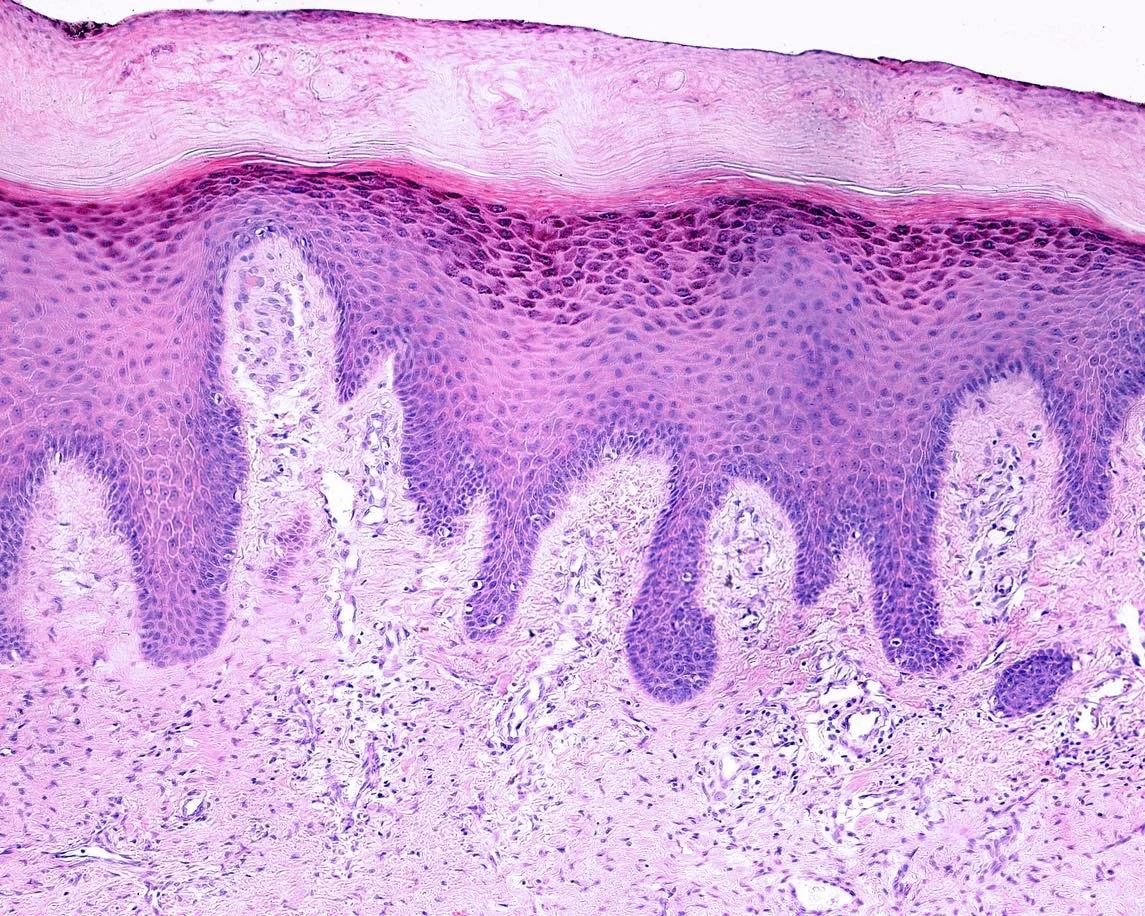
The primary physical barrier is the stratum corneum, the outermost layer of the epidermis, composed of flattened, anucleate cells called corneocytes arranged in a structure that has been compared to bricks and mortar. The corneocytes are the bricks; the lipid matrix that surrounds them is the mortar. The stratum corneum forms the physical barrier integrating various levels of protective mechanisms, including acidic buffering capacity protecting against chemical aggressions and the skin microbiome that controls the proliferation of pathogens.
The lipid matrix, the mortar, is not a simple mixture. It is composed of three principal components in a specific ratio: ceramides, cholesterol, and free fatty acids.
Ceramides are a family of lipids that, with cholesterol and free fatty acids, constitute the inter-corneocyte lipids, forming dense lamellar structures between adjacent corneocytes that ensure an efficient barrier to water evaporation and protection from foreign agent penetration.
Ceramides alone account for approximately 50% of the lipid content of the stratum corneum, and their specific molecular structure, the particular combination of sphingoid base and fatty acid chain, determines the density and permeability of the barrier they form.
Clinical and experimental studies have found different classes of ceramide species to affect the skin barrier non-uniformly, with some ceramides associated with impaired barrier function and others associated with a healthy, unimpaired skin.
Beneath the stratum corneum, in the viable epidermis, a second barrier layer operates through tight junctions, protein complexes that link adjacent keratinocytes and restrict the movement of water and water-soluble substances between cells.
Tight junctions, located in the granular layer of the epidermis, are crucial boundary elements in the differentiation process, particularly in the transition from living cells to dead cells. These tight junctions provide a secondary line of defence that complements the lipid matrix above, and their disruption, through inflammation, certain skin conditions, or aggressive topical treatment significantly increases barrier permeability.
The acid mantle, the slightly acidic surface pH of healthy skin, typically between pH4.5 and pH5.5 is the third dimension of the barrier system. This acidity is not incidental. It is essential for the function of the enzymes responsible for ceramide synthesis and for maintaining the integrity of the microbiome. Disruption of the acid mantle, through the use of high-pH cleansers, for exampls has measurable consequences for lipid processing and barrier integrity.
What the barrier actually does
The primary function of the skin barrier is the prevention of trans-epidermal water loss; the regulation of water movement from the body to the environment.
A healthy barrier maintains hydration in the deeper tissue layers by preventing passive evaporation through the skin surface. When the barrier is compromised, trans-epidermal water loss increases and the clinical consequences are immediate: dryness, tightness, sensitivity, and a loss of the plumpness and resilience that adequate dermal hydration provides.
Beyond hydration, the barrier performs a sophisticated immunological surveillance function. Cells in the epidermis are continuously sampling the environment at the skin surface, responding to antigens and coordinating immune responses.
The physical integrity of the barrier determines what reaches those surveillance cells, a competent barrier filters out most environmental insults; a compromised one allows penetration of allergens, irritants, and pathogens that would not otherwise access the immune system. This is the mechanism behind the well-documented relationship between barrier impairment and inflammatory skin conditions.
What disrupts it
The list of barrier disruptors is long, and many of them are present in the daily environment of most patients. Understanding which factors are most clinically significant helps to prioritise the advice we give.
Ultra-Violet radiation
UV radiation is the most significant and most prevalent environmental barrier disruptor. UVB exposure disrupts the epidermal barrier function in a dose-dependent manner, and skin barrier disruption can lead to acute inflammatory responses or exacerbation of chronic inflammatory skin diseases. Trans-epidermal water loss is a commonly measured parameter for skin barrier disruption, and multiple reports have confirmed that different UV doses cause increased trans-epidermal water loss in both murine and human samples.
The barrier damage from UV exposure is cumulative, which is why rigorous daily SPF use is not simply cosmetically motivated, it is a genuine barrier protection strategy.
Air pollution and smoking
Air pollution and smoking produce oxidative stress that damages the lipid matrix and the corneocytes. Synergistic effects occur upon the combined exposure to UV and cigarette smoke, leading to epidermal barrier disruption, increased erythema, and decreased elasticity. Air pollution, particularly particulate matter, is linked to decreased expression of epidermal structural proteins such as filaggrin, which further compromises barrier integrity.
Aggressive skincare
Aggressive skincare is a clinically significant and frequently under-acknowledged disruptor.
Over-exfoliation, whether through physical scrubs, high-concentration chemical exfoliants, or daily use of retinoids at higher than tolerated doses removes the corneocytes and disrupts the lipid matrix faster than it can be replenished. The result is a compromised barrier that is paradoxically more reactive to every subsequent product applied to it. This is among the most common presentations we see in patients who have been following complex, high-active skincare routines without adequate barrier support.
Age
Age disrupts the barrier through multiple mechanisms simultaneously. Ceramide production declines, lipid processing becomes less efficient, the acid mantle becomes less reliably maintained, and the renewal cycle of the stratum corneum slows. The compounding effect of these changes produces the dryness, sensitivity, and reduced resilience that many patients in their forties and fifties describe, and that become substantially worse at the perimenopause, when oestrogen-mediated support for multiple barrier components is withdrawn simultaneously.
How to strengthen it
The evidence base for barrier repair is considerably more solid than the evidence base for many of the more exotic topical ingredients currently being marketed. The following represent the most clinically credible approaches.
Ceramides
Ceramides are the most direct intervention available. Ceramide-containing moisturisers significantly improve skin hydration within 24 hours and help restore barrier integrity. Research shows that all three lipid components, ceramides, cholesterol, and fatty acids, are required for proper barrier function, and applying just one or two delays healing. Topical ceramide formulations replenish the lipid mortar directly, and the evidence for their efficacy in reducing trans-epidermal water loss and improving clinical measures of barrier function is robust.
Retinoids — a paradoxical relationship with the barrier
Retinoids deserve specific mention in the context of barrier function because their relationship with the stratum corneum is more nuanced than their reputation as a gold-standard skincare ingredient might suggest.
In the short term, retinoids disrupt the barrier. By accelerating keratinocyte turnover, they reduce the time available for the orderly maturation of the stratum corneum and the enzymatic processing of ceramide precursors in the lamellar bodies. The clinical consequence is the familiar retinoid adaptation period, dryness, flaking, tightness, and increased sensitivity which represents a genuine and measurable increase in transepidermal water loss during the early weeks of use.
In the medium to long term, the picture reverses. Retinoids upregulate filaggrin expression, the structural protein essential for corneocyte integrity and the production of natural moisturising factors within the stratum corneum and stimulate ceramide synthesis indirectly through their effects on keratinocyte differentiation.
Sustained retinoid use in adapted skin produces a thicker, better-organised stratum corneum with measurably improved barrier function. The clinical implication of this biphasic relationship is straightforward but frequently overlooked in prescribing practice: the adaptation period should be actively managed with concurrent barrier support, ceramide-containing moisturisers and niacinamide rather than simply endured.
The barrier disruption is transient. The barrier-strengthening benefit that follows is sustained and significant.
Niacinamide
Niacinamide (vitamin B3) strengthens the barrier through a different mechanism, upregulating the skin's own ceramide synthesis rather than supplying ceramides directly. Niacinamide increases ceramide synthesis by four to five-fold and improves the skin's ability to retain moisture at different humidity levels. Studies show that 5% niacinamide can improve barrier function within four weeks. It is also anti-inflammatory, well tolerated, and compatible with almost every other active ingredient — which makes it one of the most clinically useful ingredients in the barrier repair toolkit.
Hyaluronic acid
Hyaluronic acid, when properly formulated with multiple molecular weights, contributes to barrier hydration both at the surface and at deeper tissue levels. Its role in barrier repair is supportive rather than primary, it maintains the hydration environment in which barrier recovery occurs rather than directly repairing the lipid matrix.
Sunscreen
SPF deserves its own mention in the context of barrier strengthening, not merely barrier protection. By preventing the UV-mediated lipid damage described above, consistent daily SPF use is one of the most effective barrier maintenance strategies available. A patient who repairs her barrier through ceramide-containing products at night and then fails to apply SPF in the morning is engaging in a daily cycle of repair and re-damage that significantly limits the benefit of her skincare investment.
Lifestyle Factors
A diet sufficient in essential fatty acids, avoidance of excessive hot water cleansing, and reduction in environmental exposures where possible support barrier function through systemic mechanisms that topical ingredients cannot fully compensate for.
Why this matters for everything that follows
The skin barrier is not merely a clinical concept for patients with sensitive or reactive skin. It is the gateway through which every topical product must pass — or fail to pass — to reach the tissue where it might do useful work. Understanding barrier integrity is therefore the prerequisite for understanding topical penetration, which is the prerequisite for evaluating the claims made for the increasingly sophisticated topical actives currently entering the market.
We examine those claims — for growth factors, polynucleotides, exosomes, peptides, NAD, and the broader category of advanced topical therapies — in the companion piece to this one. The barrier piece first. Because without understanding the gate, it is impossible to judge what gets through it.
The views expressed in Clinical Perspectives are the Dr Forrester's own and reflect his personal and professional experience in aesthetic medicine.
References
1. Schild M et al. The role of ceramides in skin barrier function and the importance of their correct formulation for skincare applications. International Journal of Cosmetic Science. 2024. https://onlinelibrary.wiley.com/doi/10.1111/ics.12972
2. The stratum corneum barrier: impaired function in relation to associated lipids and proteins. PMC. 2025. https://pmc.ncbi.nlm.nih.gov/articles/PMC12363509/
3. Skin Barrier Function: The Interplay of Physical, Chemical, and Immunologic Properties. PMC. 2023. https://pmc.ncbi.nlm.nih.gov/articles/PMC10706187/
4. Barrier Integrity and Immunity: Exploring the Cutaneous Front Line in Health and Disease. Annual Review of Immunology. 2025;43:219–252. https://www.annualreviews.org/content/journals/10.1146/annurev-immunol-082323-030832
5. Inflammatory Molecules Associated with Ultraviolet Radiation-Mediated Skin Aging. PMC. 2021. https://pmc.ncbi.nlm.nih.gov/articles/PMC8069861/
6. Effects of Air Pollution on Cellular Senescence and Skin Aging. PMC. 2022. https://pmc.ncbi.nlm.nih.gov/articles/PMC9320051/