
Can My Botox Stop Working?
Yes, sometimes, but usually not for the reason you think.
If you've been having Botox treatments for a while, you may occasionally wonder whether they've become less effective.
Perhaps your frown lines seem more noticeable than usual. Perhaps a friend has commented that your forehead still moves. Or perhaps you've had treatment elsewhere that didn't produce the result you expected.
It's a common concern and a perfectly reasonable question.
The good news is that true resistance to Botox appears to be very uncommon. In fact, in more than 25 years of treating many thousands of patients, I have seen only one case that I believe was highly suggestive of genuine resistance.
In most cases, when Botox appears not to be working, there's a simple explanation.
Has It Really Stopped Working?
One of the first questions I ask when reviewing a patient is whether the muscles they're noticing are actually the ones we intended to treat.
This may sound surprising, but it's quite common for patients to think their frown muscles are still active when, in reality, they're unintentionally contracting different muscles around the eyes.
For example, if someone scrunches or squeezes their eyes tightly shut, the muscles around the eyes naturally pull the eyebrows downwards. This can give the impression that the frown muscles are still working, even when they've been successfully weakened.
A simple assessment often resolves the question. Asking a patient to frown while keeping their eyes open allows the true frown muscles to be assessed without interference from the muscles around the eyes.
Sometimes the treatment hasn't failed at all. It simply needs careful assessment.
Expectations Can Change
There's another reason why Botox can appear less effective over time. After several successful treatments, it's easy to forget how active your facial muscles were before you ever started treatment.
Instead of comparing today's result with your natural expression, you're comparing it with the excellent result you achieved after your previous treatment. In other words, as results become the norm, our expectations naturally become higher.
The Dose May Need Adjusting
Not every face requires the same amount of Botox.
Some people naturally have much stronger facial muscles than others.
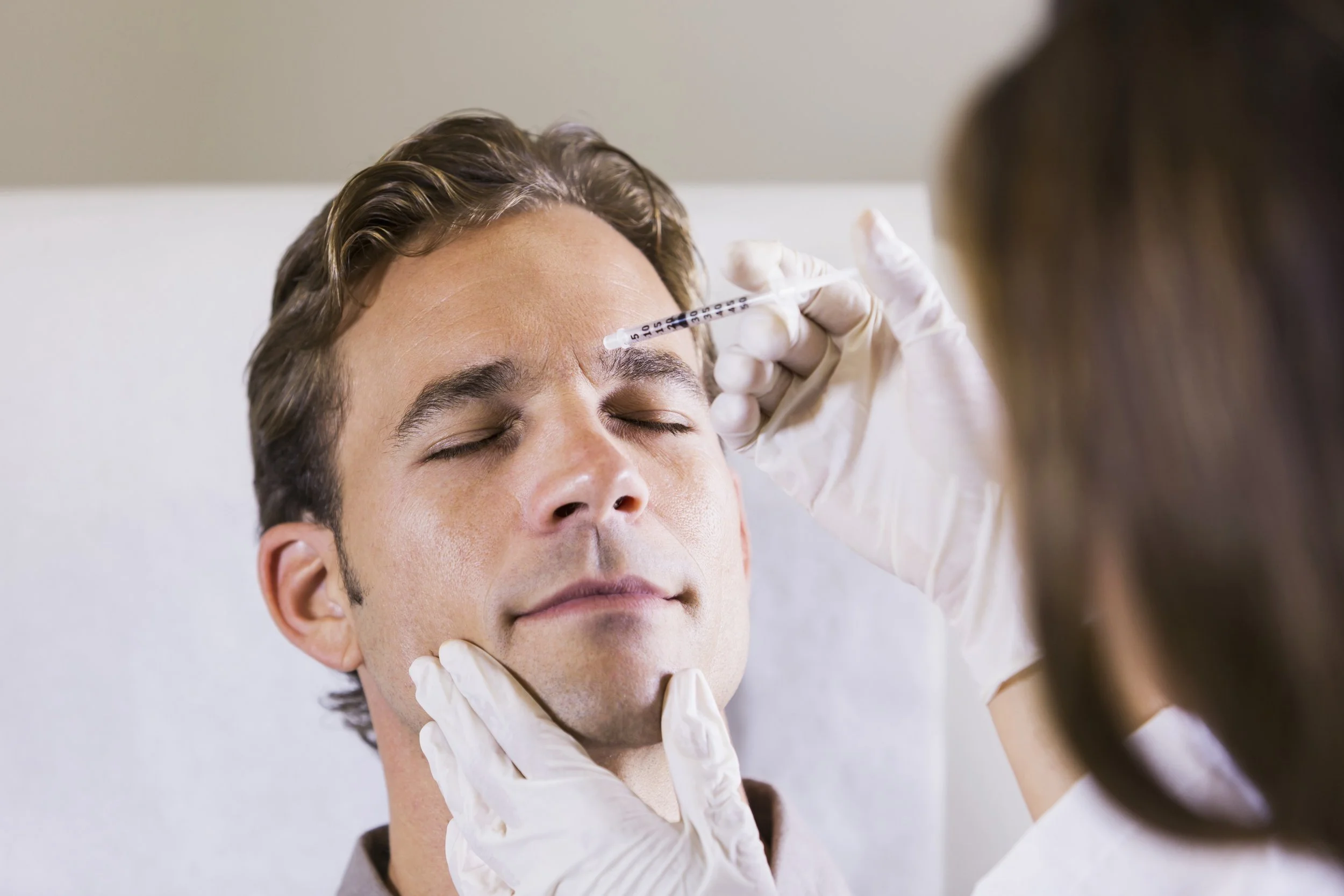
Men, in particular, often require higher doses because of greater muscle bulk, although there is considerable variation between individuals.
Muscle activity can also change over time, meaning that the dose which worked well previously may not always remain the ideal dose in the future.
This is one reason why treatment should always be tailored to the individual rather than following a standard formula.
Sometimes the Treatment Was Simply Too Conservative
Another possibility is that the original dose was never quite enough to produce the desired result.
In recent years there has been growing interest in terms such as "Baby Botox" and lower-dose treatments. Used appropriately, these can be excellent options for selected patients who want very subtle softening of facial movement.
Problems arise when the same conservative approach is applied to everyone.
Someone with naturally strong facial muscles may require a significantly higher dose than someone with finer muscle activity. If too little Botox is used, the muscles may weaken slightly but continue to contract enough for lines and facial movement to remain more noticeable than expected. See why cheap Botox is often no Botox.
The result is that patients sometimes conclude that Botox "doesn't work on me" or that it has "stopped working", when in reality the dose was simply insufficient for their individual muscle strength.
The aim isn't to use the smallest possible dose. The aim is to use the right dose for the individual patient.
You may also like to read Why the Dose of Your Botox Treatment Matters and Is Baby Botox Worth It?
Technique and Assessment Matter
Good Botox is about much more than placing a series of injections into standard points. Every forehead is different.
The strength of the muscles, their pattern of movement, brow position, facial symmetry and previous treatments all influence where injections should be placed—and just as importantly, where they shouldn't.
An experienced practitioner continually adapts the treatment plan to the individual sitting in front of them.
This is one reason whyfollow-up appointments can be so valuable. Occasionally a small adjustment is appropriate. Sometimes reassurance is all that's needed.
Can the Body Become Resistant to Botox?
The short answer is yes—but fortunately it appears to be uncommon.
Over more than 25 years of clinical practice, I have encountered only one patient whose treatment history was highly suggestive of genuine resistance.
He initially responded well but required a slightly higher-than-average dose because of particularly strong frown muscles. After around eighteen months, the treatment gradually became less effective despite increasing the dose. Eventually, there was no detectable muscle weakness at all, even after further treatment and, later, trying a different brand of botulinum toxin.
Although specialised laboratory testing wasn't performed, the pattern was highly suggestive of neutralising antibody formation. This is a recognised but fortunately rare cause of treatment failure.
For the overwhelming majority of patients, however, resistance is not the explanation when Botox appears less effective.
Key Takeaway
In more than 25 years of treating many thousands of patients, I have seen only one case that I believe represented true resistance to Botox. Most patients who think their Botox has stopped working have a much simpler, and usually correctable, explanation.
The Bottom Line
If your Botox doesn't seem to be working as well as it once did, don't immediately assume you've become resistant.
In most cases there is a much simpler explanation. The treatment may need reviewing, the dose may need adjusting, expectations may have changed or the muscles being assessed may not be the ones that were actually treated.
The important thing is not to guess. A careful review by an experienced practitioner will usually identify the reason and help determine the most appropriate next step.
Because, as with so much in aesthetic medicine, understanding why something has happened is every bit as important as knowing how to treat it.
For more information and useful articles about anti-wrinkle injections read our anti-wrinkle treatment page.

References
Kroumpouzos G, et al. Exploring Nonresponse to Botulinum Toxin in Aesthetics: Narrative Review of Key Trigger Factors and Effective Management Strategies. JMIR Dermatology. 2025;8:e69960 https://pubmed.ncbi.nlm.nih.gov/40273416/
Torres S, Hamilton M, et al. Neutralizing antibodies to botulinum neurotoxin type A in aesthetic medicine: five case reports. Clin Cosmet Investig Dermatol. 2013;7:11-17 https://pubmed.ncbi.nlm.nih.gov/24379687/
Rahman E, et al. Immunogenicity to Botulinum Toxin Type A: A Systematic Review With Meta-Analysis Across Therapeutic Indications. Aesthetic Surgery Journal. 2022;42(1):106-120 https://pubmed.ncbi.nlm.nih.gov/33528495/