
Retinoids — The Facial Skincare Ingredient That Nothing Has Yet Replaced
Retinoids — The Gold Standard Facial Skincare Ingredient
They have been around for decades. The evidence behind them is unmatched. And despite the constant arrival of newer, trendy, more exciting sounding ingredients, nothing has come close to replicating what retinoids do. Here is what you actually need to know.
What is a retinoid?
The word "retinoid" refers to the entire family of vitamin A derivatives used in skincare, from prescription-strength tretinoin to the retinol found in high street moisturisers. They all work through the same fundamental mechanism; binding to receptors in skin cells and triggering a cascade of biological changes. But they vary enormously in potency, in the speed at which they work, and in how much irritation they produce along the way.
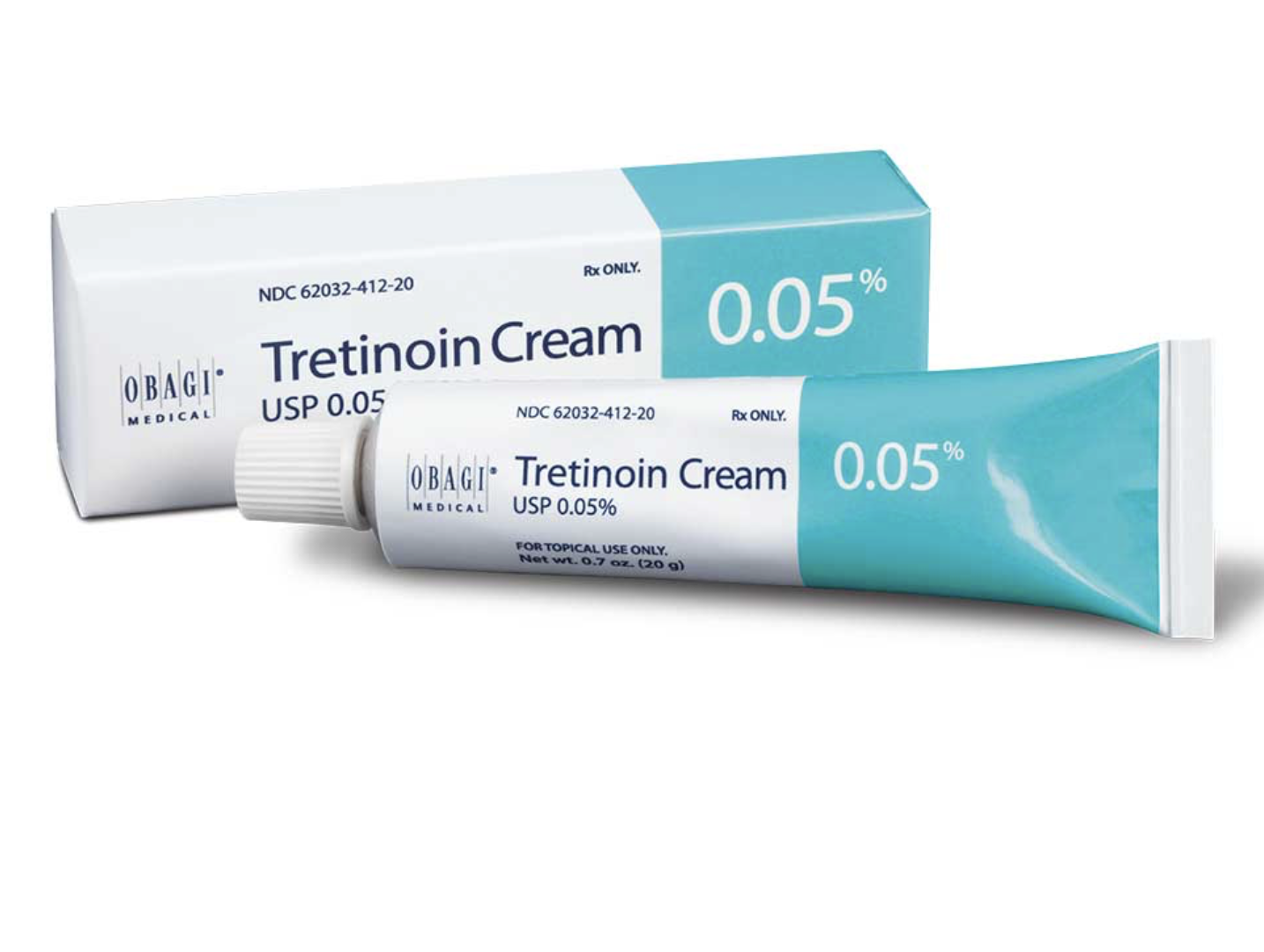
Understanding the retinoid family, and where different products sit within it, is the most useful thing you can do before deciding which retinoid is right for you.
Why retinoids are still the gold standard
Retinoids have been used in dermatology for over fifty years. In that time they have accumulated a research evidence-base that no other topical skincare ingredient comes anywhere near close to matching.
They stimulate collagen production.
They inhibit the enzymes that break collagen down.
They accelerate the renewal of the skin surface
They improve skin texture, tone, and evenness of pigmentation.
They normalise the way skin cells mature and organise themselves.
And they improve the structure and function of the skin barrier over time.
No newer ingredient — not growth factors, not peptides, not exosomes — has been studied as thoroughly, over as long a period, or with as consistently impressive results. They may be promising but retinoids are proven.
The family — from gentle to potent
All retinoids must be converted, in the skin, to their active form, retinoic acid, before the skin can use them. The distance each form sits from that active molecule determines both its potency and its tolerability.
Retinyl esters
Retinyl palmitate and similar are the mildest and most commonly found in everyday moisturisers. They require multiple conversion steps and deliver relatively modest clinical effect. Fine as a starting point; not the destination.Retinol
Retinol is the most widely researched cosmeceutical retinoid. It requires two conversion steps to become active and takes longer to produce results than prescription tretinoin — typically six months versus three to four — but with a well-established efficacy profile and a manageable tolerability profile at lower concentrations.Retinaldehyde
Retinaldehyde (retinal) requires only a single conversion step and delivers retinoic acid more efficiently than retinol. It is more potent and more promising. But more unstable in formulation which is why reliably effective retinaldehyde products are less common than the marketing around it might suggest.Tretinoin
Tretinoin is prescription-only and is already in its active form and requires no conversion at all. It is the most potent, the best evidenced, and the most likely to cause irritation during the adaptation period. It is also, for patients who can tolerate it, the most effective topical retinoid available.
The truth about gentle retinoids
The skincare industry has invested considerable effort in producing retinoids that cause less irritation; encapsulated retinol, slow-release formulations, and newer molecules such as hydroxypinacolone retinoate (HPR) that claim to deliver retinoid activity without the associated adaptation period.
Some of these innovations are genuinely useful. All of them deserve the same question :- If a retinoid is less irritating, is it because it is delivering less active retinoic acid to the tissue?
In most cases, the answer is yes.
The conversion pathway from cosmeceutical retinoid to prescription tretinoin is a gradient of both efficacy and tolerability and the two tend to move together. A patient who is experiencing no adaptation symptoms at all may be experiencing relatively little biological effect. That is not always a bad trade-off. But it is worth knowing.
Managing the adaptation period
The dryness, flaking, and sensitivity that accompany the early weeks of retinoid use are real and they put a significant number of patients off a treatment that would, if persevered with, serve them very well.
The key is to manage the adaptation rather than avoid it. Start at the lowest available concentration. Apply every third night initially rather than daily. Support the barrier throughout with a ceramide-containing moisturiser and niacinamide both of which actively counteract the barrier disruption that retinoids produce in the short term. Increase frequency and concentration only when the skin has demonstrated tolerance at the current level.
The adaptation period is temporary. The barrier-strengthening and collagen-stimulating benefits that follow it are sustained. Getting through the first few weeks with the right support is considerably easier than starting over from the beginning after giving up.
Where retinoids sit in a broader skincare plan
Retinoids work best as part of a plan rather than in isolation. A daily SPF is non-negotiable. Retinoids increase photosensitivity and the UV damage they help repair will simply continue if the skin is not protected. A barrier-supporting moisturiser with ceramides applied before or after the retinoid reduces irritation and improves tolerance. And the newer topical actives such as polynucleotides, growth factors, and peptides can complement a retinoid routine meaningfully, addressing dimensions of skin health that retinoids do not reach as directly.
References
1. Cosmetic retinoid use in photoaged skin: A review of the compounds, their use and mechanisms of action. International Journal of Cosmetic Science. 2025. https://pmc.ncbi.nlm.nih.gov/articles/PMC11788006/
2. Use of Retinoids in Topical Antiaging Treatments: A Focused Review. PMC. 2022. https://pmc.ncbi.nlm.nih.gov/articles/PMC9618501/
3. Retinoids in the treatment of skin aging: an overview of clinical efficacy and safety. PMC. 2006. https://pmc.ncbi.nlm.nih.gov/articles/PMC2699641/