
The Skin Barrier — What It Is, Why It Matters, and How to Keep It Healthy
The skin barrier - the foundation upon which everything else builds.
The most important structure in skincare is one that most skincare marketing barely mentions. Here is what the skin barrier actually is, what damages it, and what genuinely helps.
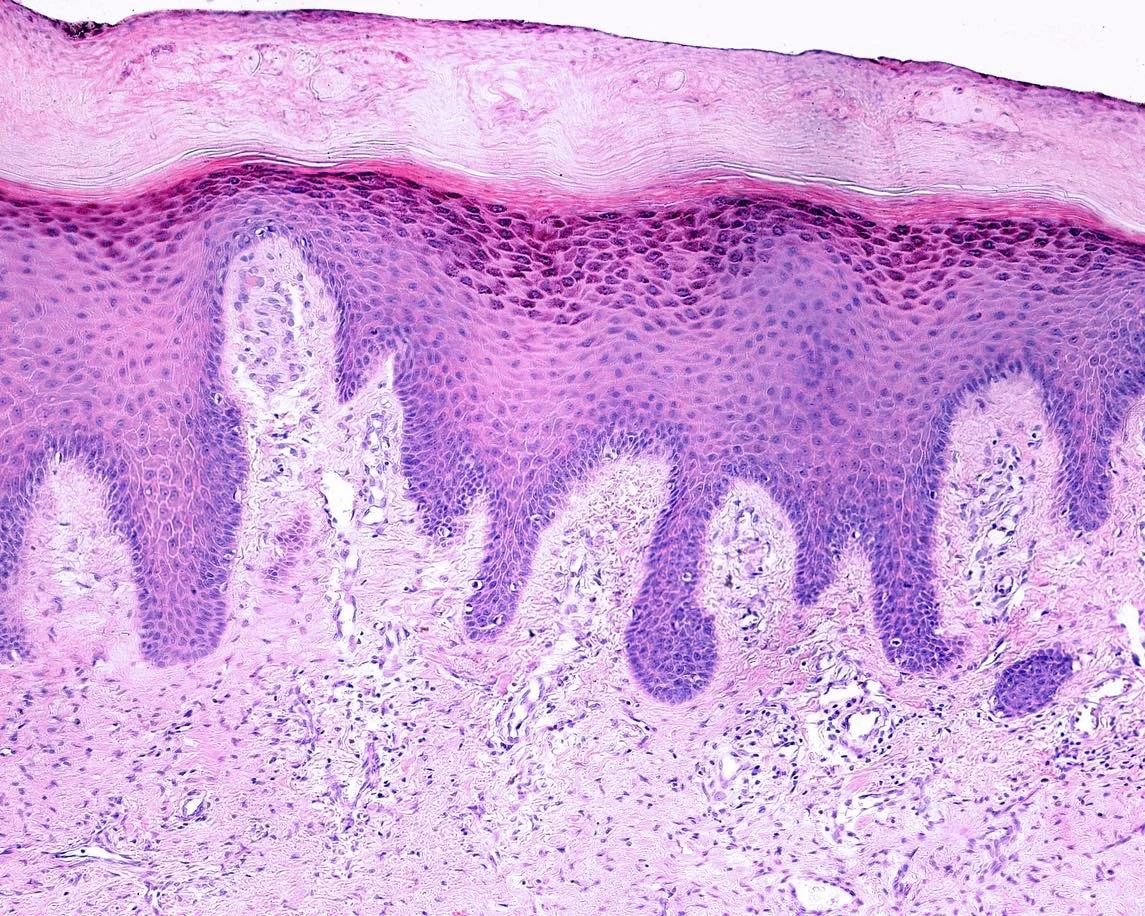
Skin barrier - the foundation upon which everything else builds.
It is designed to keep the good things in, and the bad things out
A structure worth understanding
The phrase "skin barrier" appears on product labels and in beauty articles usually without any explanation of what it actually means. Understanding it properly, even at a basic level, makes every subsequent decision about skincare considerably more useful.
What the skin barrier actually is
The outermost layer of the skin is composed of flattened skin cells arranged in a structure that has been compared to bricks and mortar. The cells are the bricks. The lipid matrix surrounding them is the mortar, a precisely organised mixture of ceramides, cholesterol, and fatty acids that determines how well the barrier performs.
This lipid mortar does two essential things. It prevents water from evaporating through the skin surface, keeping the deeper tissue layers hydrated. And it prevents environmental irritants, allergens, and pathogens from penetrating into the skin below. A healthy barrier does both of these things quietly and efficiently. If compromised, both fail — producing dryness, sensitivity, and reactivity that can be difficult to resolve until the barrier itself is addressed.
What damages it
Several factors disrupt the barrier in ways that are worth knowing about.
Ultra-violet radiation from sunlight
UV radiation is the most significant. Sun exposure damages the lipid matrix in a dose-dependent and cumulative way — which is one of the reasons that daily SPF use is a barrier protection strategy as much as a cosmetic one.Aggressive exfoliation
Over-exfoliation or over-use of gritty skin polishes is one of the most common causes of barrier damage in patients with active skincare routines. Chemical exfoliants, AHAs, BHAs, and high-concentration vitamin C used too frequently remove the stratum corneum faster than it can replenish itself. The result is skin that looks temporarily brighter but feels tight, reactive, and sensitive to products it previously tolerated well.Harsh cleansers
Harsh cleansers with a alkaline pH strip the natural acidity of the skin surface which is essential for the enzymatic processes that produce and maintain the lipid matrix. Many conventional soaps fall into this category.Air pollution and smoking
Air pollution and smoking generate oxidative stress that degrades the lipid matrix and damages the structural proteins of the stratum corneum. Their effects are compounded when combined with UV exposure.Your age
Increasing age reduces barrier efficiency through multiple mechanisms simultaneously, ceramide production declines, lipid processing slows, and the renewal cycle of the stratum corneum lengthens. These changes accelerate significantly at per-imenopause, when oestrogen-mediated support for barrier function is withdrawn.
In a recent blog post we take a look at the menopause and your skin.
What genuinely helps
Ceramides
Ceramides are the most direct intervention. They replenish the lipid mortar directly, and the evidence for their efficacy in reducing water loss and restoring barrier integrity is robust. Look for products that combine ceramides with cholesterol and fatty acids, all three components are needed for proper barrier repair, and using just one or two is less effective than using all three together.Niacinamide (vitamin B3)
Niacinamide strengthens the barrier by stimulating the skin's own ceramide production rather than supplying ceramides directly. Studies show that 5% niacinamide improves barrier function measurably within four weeks. It is also anti-inflammatory, well tolerated, and compatible with almost every other active ingredient.Hyaluronic acid
Hyaluronic Acid, when properly formulated, supports barrier hydration by drawing moisture to the skin surface. Its role is supportive rather than primary — it maintains the hydration environment in which barrier recovery occurs.Sunscreen
SPF daily, broad spectrum sunscreen, without exception. By preventing ongoing UV-mediated lipid damage, consistent SPF use is one of the most effective barrier maintenance strategies available. A patient who repairs her barrier at night and fails to apply SPF in the morning is engaged in a daily cycle of repair and re-damage.Retinoids
Retinoids are widely and rightly regarded as one of the most effective ingredients in medical skincare, but their relationship with the skin barrier is more complicated than most advice acknowledges.
A word about Retinoids
When you first start using a retinoid, it temporarily disrupts the barrier. The dryness, flaking, and sensitivity that many patients experience in the early weeks are genuine barrier disruption symptoms. Transepidermal water loss increases during this period, and the skin becomes more reactive as a result.
The important thing to know is that this phase is temporary and what comes after it is the opposite. Once the skin has adapted, retinoids actively strengthen the barrier by improving the quality and organisation of the stratum corneum and stimulating ceramide production. The net long-term effect on barrier function is positive and significant.
The key to getting there without unnecessary discomfort is to start at a low concentration, use it infrequently at first, and support the barrier throughout the adaptation period with ceramide-containing moisturisers and niacinamide. This is not optional extra advice. It is the difference between a patient who perseveres with a retinoid and one who gives up after three weeks because nobody explained what was going to happen. Read our post about why retinoids are the gold standard of facial creams.
The foundation of everything else
A healthy skin barrier makes every other skincare intervention more effective. Products penetrate better through a well-organised stratum corneum. Active ingredients reach the tissue where they can do useful work. And the skin is better placed to tolerate the more advanced topical therapies, growth factors, polynucleotides, peptides, that we examine in the companion piece to this one.
Start with the barrier. Everything else builds from there.
References
Skin Barrier Function: The Interplay of Physical, Chemical, and Immunologic Properties. PMC. 2023. https://pmc.ncbi.nlm.nih.gov/articles/PMC10706187/