
Am I a good candidate for a Polynucleotide treatment?
Polynucleotides are not suitable for everyone and understanding who they suit best is more useful than a general description of what they do.
At the Surrey-based Cosmetic Doctors Company, in our experience, the patients who get the best response share a specific set of concerns. Additionally, being clear about who we would redirect toward something different is equally important.
Who tends to respond the best?
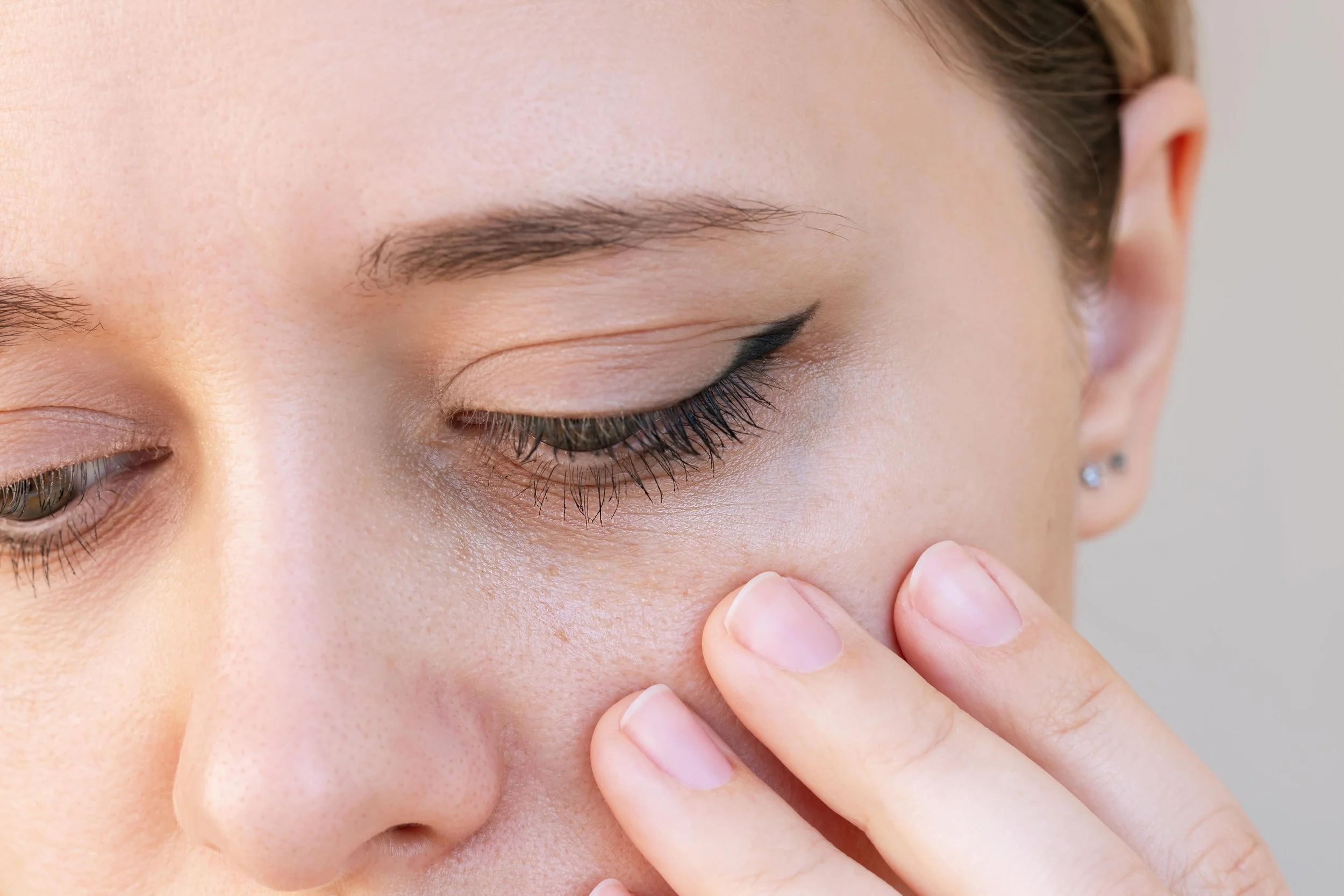
The patients we most commonly recommend polynucleotides to are those whose primary concern is a loss of superficial skin quality.
This may be manifested by fine lines, crepey texture and reduced resilience, rather than volume loss or structural change. The skin looks tired, fragile, or thinner than it once did, and topical skincare alone is no longer keeping pace with that deterioration.
Two groups present this picture most clearly.
The first is patients who do not require any significant restoration of deeper volume. Their face has not hollowed substantially, and dermal fillers are not indicated, but the quality of the skin itself has diminished in a way that merits treatment. For this group, polynucleotides address the problem directly, working at the level where the concern actually exists.
The second is patients who, despite understanding the safety and appropriateness of dermal fillers, remain reluctant to pursue them. This is a position we respect. Polynucleotides offer a meaningful regenerative option for patients who want to do something considered and evidence-based for their skin without introducing a volumising agent.
They are not a substitute for fillers where fillers are genuinely indicated, but for patients in this category, they represent a worthwhile treatment in their own right.
What both groups share is an understanding that results will be gradual and understated. Polynucleotides work progressively over weeks and months. Patients who approach the treatment with that expectation tend to be the most satisfied with the outcome.
Who Might We Redirect Toward a Different Treatment?
Three patient profiles, in our experience, are better served by a different approach.
The first is a patient with significant volume loss. Where the face has hollowed, in the cheeks, the temples, or beneath the eyes. dermal fillers offer targeted, precise restoration that polynucleotides, which work diffusely at the level of skin quality, cannot replicate. Polynucleotides may still have a role in the overall treatment plan, but they would not be the primary intervention.
The second is a patient wanting a quicker result. Polynucleotides require patience. The biological processes they stimulate take time to produce visible improvement, and the endpoint, when it arrives, is a subtler and more natural one than many patients initially have in mind. If the priority is a visible result within weeks, this is not the right treatment for that expectation.
The third is a patient whose concerns are primarily structural rather than superficial such as significant tissue descent, deep volume deficit, laxity & howling or changes that require intervention at a deeper biological level. These patients are better served by treatments such as Sculptra or dermal fillers, either individually or in combination, before or alongside any consideration of polynucleotides.

The Right Starting Point
If you recognise yourself in the first group, typified by concern about skin quality, fine lines, and fragility rather than volume or structure, a polynucleotide consultation is a worthwhile conversation to have.
Your consultation is where good treatment begins. There will no obligation to proceed. The aim is to provide information and clarity, not pressure to have a treatment. All our consultations and treatments are performed by our team of expert medical doctors.
To arrange a consultation please use the links below to telephone or email or to fill out our contact form click here.