
Are Collagen Supplements Worth It?
Collagen supplements have become one of the most widely purchased skincare products on the market. The question of whether they are worth taking is one we are asked regularly and the answer is more nuanced than either the marketing or the sceptics suggest.
First, a quick reminder of what collagen actually does
Collagen is the most abundant structural protein in the body, and in skin it accounts for around 75% of its dry weight, forming the scaffolding that gives skin its firmness and elasticity. Production is handled by fibroblasts in the dermis, and it begins to decline naturally from the mid-twenties onwards, accelerating further during perimenopause.
We've covered this in detail in Collagen: What It Is, Why You Lose It, and Why It Matters for Your Skin, but the short version is this, your skin's collagen levels are always falling, gradually, throughout adult life. The question this post addresses is whether taking a collagen supplement can meaningfully slow or reverse that decline.
Our position is one of cautious, qualified support for specific products, in the right context, with realistic expectations.
Why the Scepticism Exists
The argument against collagen supplements is straightforward and not unreasonable. Collagen is a protein. When you ingest a protein, the digestive system breaks it down into its constituent amino acids before absorption. The idea that collagen consumed orally survives that process intact, travels through the bloodstream, and arrives in your skin to meaningfully supplement what is already there strains credibility.
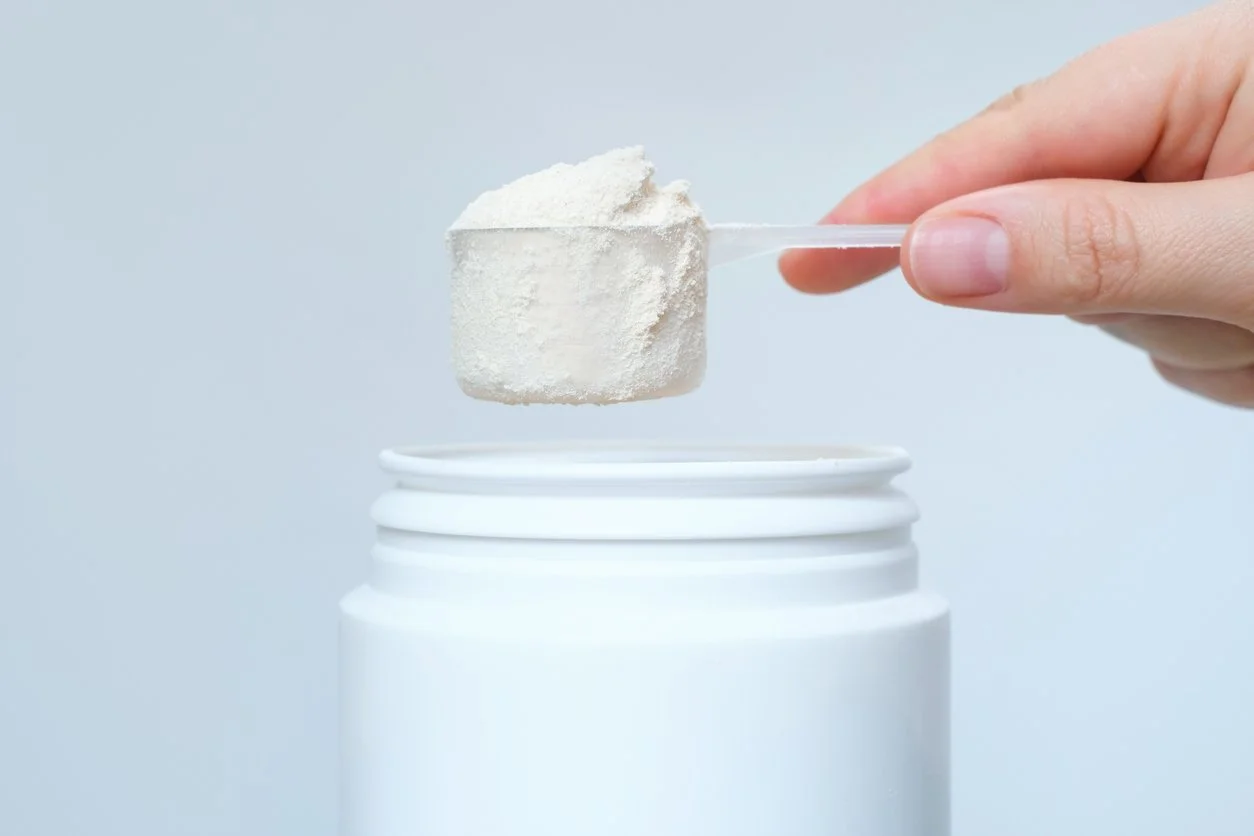
This is why many clinicians have dismissed collagen supplements as an expensive way to consume protein your body could obtain more cheaply from food.
Why the Evidence Gives Us Pause
The sceptical argument, however, does not fully account for what the clinical studies actually show. A body of randomised controlled trial data, modest in scale but reasonably consistent in direction, suggests that hydrolysed collagen peptides do produce measurable improvements in skin hydration, elasticity, and the appearance of fine lines.
These are not dramatic effects, and they are not transformative, but they are statistically significant and they appear in peer-reviewed literature rather than manufacturer-funded marketing material alone.
The working hypothesis is that collagen peptides may act less as direct building blocks and more as biological signals; fragments that the body recognises and responds to by upregulating its own collagen synthesis. Whether that mechanism fully explains the observed effects remains debated, but it offers a more plausible account than simple replacement.
What Does "Cautiously Supportive" Mean in Practice?
It means this. If you are already eating well, protecting your skin from UV exposure, using evidence-based topical ingredients such as retinoids, and considering or undergoing treatments that stimulate collagen production at a biological level, then a quality hydrolysed collagen supplement is a reasonable addition. It is not a substitute for any of those things, and it should not be the first or only investment you make in your skin.
Product quality matters. Not all collagen supplements are equivalent. Hydrolysed collagen peptides with a reasonable evidence base behind them are a different proposition from collagen-labelled products that contain little of clinical relevance.
And expectations matter most of all. The effects, where they exist, are modest and gradual. Anyone expecting a supplement to replicate what collagen-stimulating treatments such as Sculptra achieve at a biological level will be disappointed.
Used in the right context, with realistic expectations, a quality collagen supplement is unlikely to do harm and may offer modest benefit.
For more on why collagen matters for your skin read Where Has My Collagen Gone?
To discuss treatments that are proven to stimulate collagen production directly, arrange a consultation with one of our doctors by telephone, email, or through our contact form.

References
Virgilio N et al. Absorption of bioactive peptides following collagen hydrolysate intake: a randomized, double-blind crossover study. Frontiers in Nutrition. 2024. https://pmc.ncbi.nlm.nih.gov/articles/PMC11325589/
Barati M et al. Collagen supplementation for skin health: A mechanistic systematic review. Journal of Cosmetic Dermatology. 2020. https://pubmed.ncbi.nlm.nih.gov/32436266/
Wang Y et al. The Sustained Effects of Bioactive Collagen Peptides on Skin Health: A Randomized, Double-Blind, Placebo-Controlled Clinical Study. Journal of Cosmetic Dermatology. 2025. https://pmc.ncbi.nlm.nih.gov/articles/PMC12661388/
Quispe-Inquiltupa PA et al. Effects of Hydrolyzed Collagen as a Dietary Supplement on Fibroblast Activation: A Systematic Review. PMC. 2024. https://pmc.ncbi.nlm.nih.gov/articles/PMC11173906/