
Biostimulatory Treatments — A New Way of Thinking About Skin Rejuvenation
Biostimulatory Treatments — Triggering Your Skin to Restore Itself
Why the most exciting developments in aesthetic medicine are not about adding volume or relaxing muscles, but about encouraging the skin to use its natural in-built mechanisms to restore itself.
A paradigm shift in how we think about skin ageing
For much of the history of aesthetic medicine, the dominant approach to facial ageing has been essentially corrective. It is, at the Cosmetic Doctors Company in Esher, Surrey, what we have called “see a line and treat it”.
Lines were relaxed. Lines were were filled. Volume was replaced. Surface concerns were addressed, directly and immediately, with products designed to fill or smooth what time had altered. Botox and dermal fillers occupying a central and still very important role.
These approaches certainly remain valuable and have their place in a well-considered treatment plan. But over the past decade, a different philosophy has slowly been gaining both scientific credibility and clinical momentum; one that asks not how we can correct the signs of ageing, but how we can encourage the skin and underlying tissue to restore themselves naturally.
What biostimulatory treatment actually means
Sometimes referred to as Regenerative Medicine or bio-regeneration, the term biostimulatory refers to treatments that work by stimulating the body's own biological processes.
Rather than introducing a corrective substance that simply occupies space or blocks a muscle or replacing what has been lost, these treatments prompt the skin and soft tissue to produce more of what they need.
Healthy skin needs collagen, elastin, hyaluronic acid, and the other structural proteins that give young skin its resilience, firmness, and quality. The results are therefore not immediate in the way that filler results are.
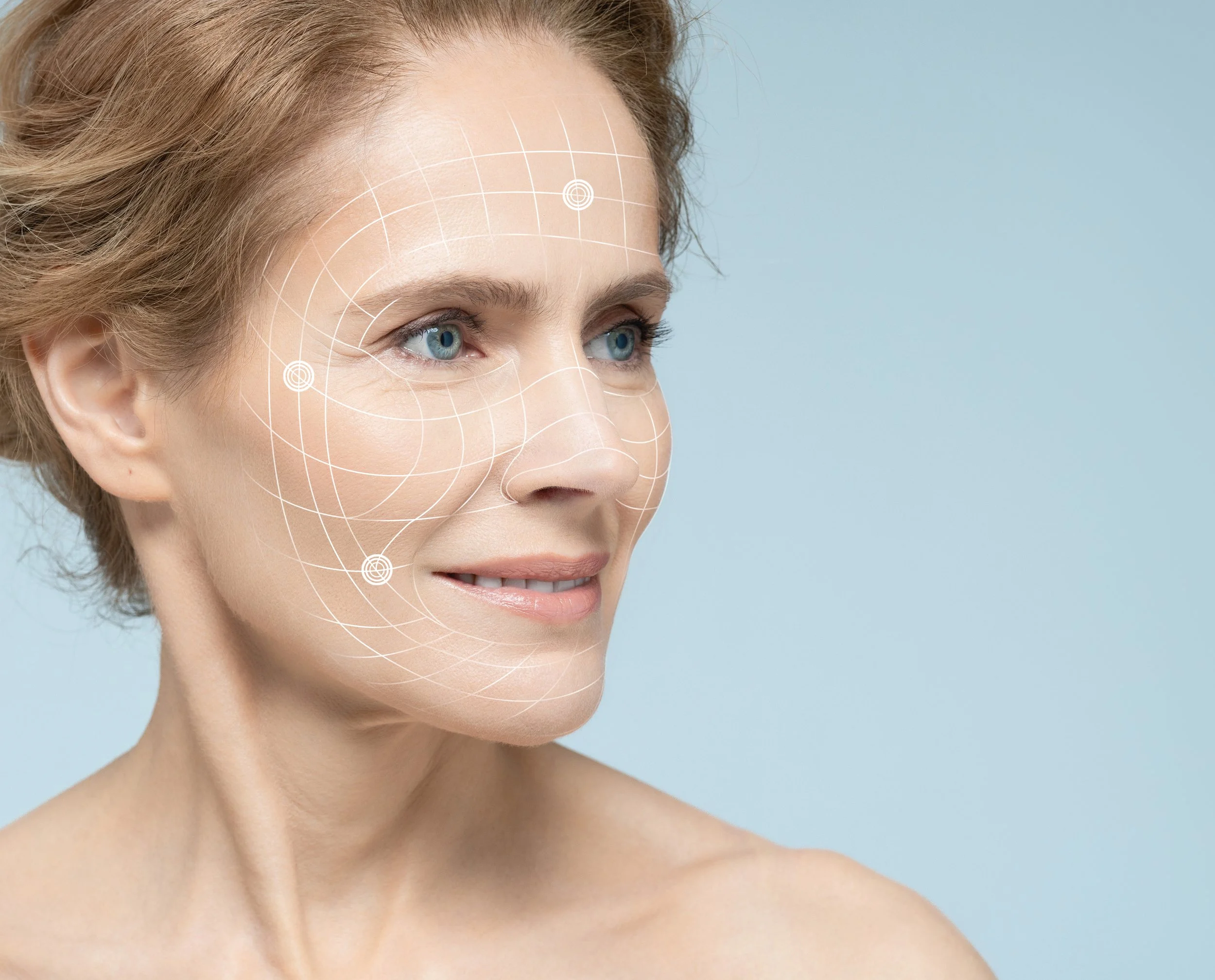
They develop gradually, as the biological response unfolds, and they tend to look natural precisely because they are the product of the body's own regenerative capacity rather than an external correction.
Why the science matters
The distinction between filling and stimulating is not merely semantic. It reflects a fundamentally different understanding of what is happening to the face as it ages, and what kind of intervention is most likely to serve it well over time.
Volume loss and structural change are part of the ageing picture, and addressing them directly with filler remains clinically appropriate in many situations. But the quality of the skin itself, its thickness, its texture, its ability to hold moisture and reflect light, depends on the health of the tissue at a cellular level. Biostimulatory treatments address that deeper layer of the problem in a way that conventional fillers cannot.
The treatments in this category
Several distinct treatments fall under the biostimulatory umbrella, each working through a different mechanism but sharing the same fundamental principle of harnessing the body's own regenerative capacity.
Sculptra, based on poly-L-lactic acid, stimulates collagen production gradually over a series of treatments, restoring facial volume and improving skin quality from within. It is one of the most established biostimulators available, with a clinical track record spanning more than two decades.
Profhilo, based on a highly concentrated form of hyaluronic acid, works not by adding volume in the conventional sense but by remodelling the tissue, improving skin laxity, hydration, and overall quality. It is particularly well suited to patients whose primary concern is skin condition rather than structural volume loss.
Polynucleotides, derived from purified DNA fragments, represent one of the most exciting developments in this field. They work at a cellular level, promoting tissue repair, reducing inflammation, and stimulating the production of new collagen and elastin. Their applications are broad and the clinical evidence base is growing rapidly.
The right treatment for the right patient
These treatments are not interchangeable, and they are not appropriate for every patient in every situation. The choice between them, and the decision about how they might sit alongside other treatments in a broader plan, depends on a careful assessment of what is actually happening in an individual face. This underlies our belief that your consultation matters more than your treatment.
What they share is a philosophy that resonates with how we believe aesthetic medicine should work at its best; working with the body rather than simply correcting it, and investing in the long-term health of the skin rather than addressing only what is visible today.
To find out more about Sculptra, Profhilo, or polynucleotide treatments, please visit the relevant pages on our website or get in touch to arrange a consultation.