What Botox Doesn't Do
Botox has transformed aesthetic medicine.
Few, if any aesthetic treatments have been studied more extensively or have a better track record than Botox. It remains the most effective way of softening the dynamic lines caused by repeated facial expression.
Read why anti-wrinkle injections remain so popular?
For reassurance regarding safety see Is Botox Safe?
Perhaps that's why it's sometimes expected to do rather more than it actually can.
Over the years, I've occasionally met patients who seem to believe that Botox can improve almost any wrinkle, in almost any part of the face or even, body.
Unfortunately, that's not how it works.
Like every good medical treatment, Botox has specific strengths, specific indications but also specific situations where it simply isn't the right answer.
Understanding those differences is one of the keys to achieving natural-looking results.
Botox Doesn't Treat Every Wrinkle
This is probably the most common misconception.
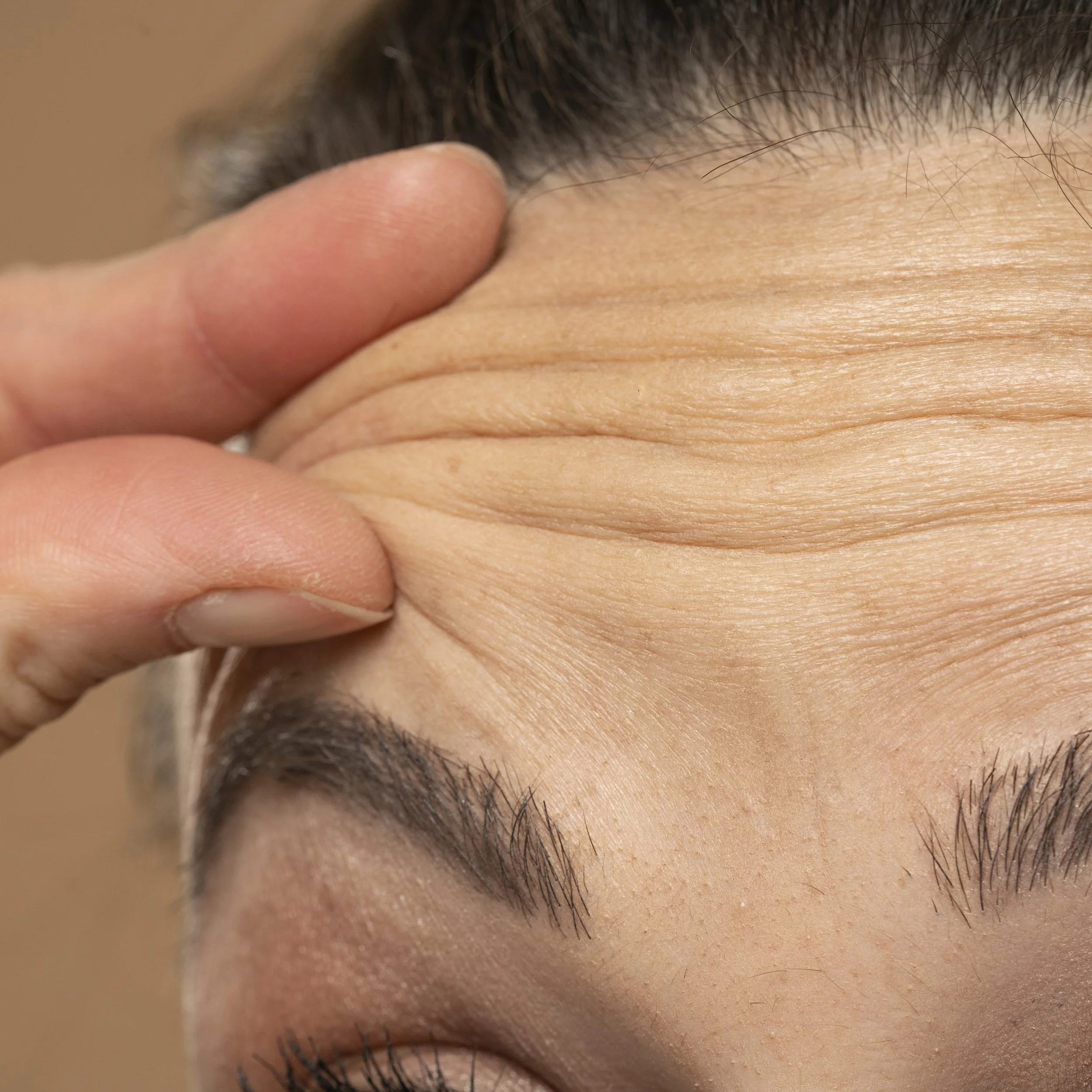
Botox works by relaxing muscles that repeatedly crease the skin during facial expression. That's why it is so effective for dynamic lines such as forehead lines, frown lines and crow's feet.
However, not every wrinkle is caused by muscle movement.
Some develop because of sun damage, loss of collagen, changes in skin quality or the gradual loss of facial volume that occurs with age.
Those problems require different solutions. Recognising the difference is one of the most important parts of an aesthetic consultation. Consider reading why your consultation matters more than your treatment.
Botox Doesn't Replace Lost Volume
As we get older, our faces gradually lose fat, collagen and structural support.
Botox cannot replace that lost volume. If hollow cheeks, deeper folds or loss of facial contour are the main concerns, other treatments are often more appropriate.
Good aesthetic medicine isn't about using the same treatment for every problem. It's about choosing the right treatment for the right patient.
Botox Doesn't Tighten Loose Skin
Wrinkle-relaxing injections don't tighten sagging skin. If skin laxity is the dominant feature, collagen-stimulating treatments, or sometimes surgery, may produce better results.
Knowing when Botox isn't the answer is just as important as knowing when it is.
Botox Doesn't Necessarily Work Better Because You Use More
It's easy to assume that a larger dose must produce a better result. In reality, the aim isn't to use more Botox. It's to use the right amount.
Too little may not achieve the desired effect. Too much may produce an unnatural appearance or restrict normal facial expression.
Finding the right balance is one of the reasons why treatment should always be tailored to the individual rather than following a standard formula.
Botox Doesn't Belong Everywhere
Because Botox works so well in certain parts of the face, it's sometimes assumed it can be used almost anywhere.
In reality, every muscle has a purpose. Some muscles create unwanted lines. Others are essential for normal expression, smiling, speaking and facial balance.
Successful treatment isn't about relaxing as many muscles as possible. It's about selecting the right muscles, using the appropriate dose and preserving the natural character of the face. Sometimes doing less achieves more.
Botox Doesn't Stop Skin Ageing
Botox slows one particular aspect of facial ageing, namely the repeated muscle movements that gradually etch expression lines into the skin.
It doesn't stop time. Your skin will continue to change as collagen declines, sunlight takes its toll and the natural ageing process continues.
The goal isn't to prevent ageing altogether. It's to help you age well.
Botox Doesn't Suit Everyone
Not every patient who enquires about Botox is an ideal candidate.
Occasionally another treatment would achieve a better result. Sometimes no treatment is the right answer.
One of the responsibilities of an experienced doctor is recognising when Botox is unlikely to deliver what a patient is hoping for. Straightforward advice is every bit as important as technical skill.

One of the responsibilities of an experienced doctor is recognising when Botox is unlikely to deliver what a patient is hoping for.
Botox Doesn't Replace Good Judgement
This may be the most important point of all.
The medicine inside the syringe is only one part of a successful treatment.
The result depends on understanding facial anatomy, assessing how individual muscles work, selecting the appropriate dose, recognising when Botox is the right treatment and just as importantly, recognising when it isn't.
That's why I believe every good aesthetic treatment begins with a thorough consultation.
The consultation isn't simply about deciding where to inject. It's about deciding whether Botox is the right treatment in the first place.
The Bottom Line
Botox remains one of the safest and most effective treatments in modern aesthetic medicine. Read about Botox Safety.
Used appropriately, it can produce beautifully natural results. But it isn't a universal solution.
The best outcomes don't come from treating every wrinkle with Botox. They come from understanding which wrinkles Botox can improve, which it can't, and having the experience to know the difference.
In aesthetic medicine, knowing when not to use Botox is every bit as important as knowing how to use it. For lots more useful information see our Botox treatment page.