
What Should I Do After My Botox?
What Actually Matters and What Almost Certainly Doesn't Matter
Botox treatment has accumulated a surprisingly long list of aftercare rules over the years. Rules such as:
Don't lie down for four hours. Don't bend over. Don't exercise. Don't have a hot shower. Don't touch your face. Don't have a facial. Don't wear a hat. Don't sleep on your side.
Patients are understandably worried that if they forget one of these instructions, their Botox might move somewhere it shouldn't or simply stop working.
But how much of this advice is actually supported by science?
The reassuring answer is probably much less than you might think.
What Happens to Botox After It Is Injected?
Understanding what happens immediately after treatment helps explain why many traditional aftercare rules make no scientific sense.
Botulinum toxin works at the junction between a nerve and a muscle. The botulinum molecule attaches selectively to receptors on the nerve ending and is then taken inside the nerve cell, where it interferes with the release of the chemical signal responsible for muscle contraction.
This process begins rapidly after injection, within minutes.
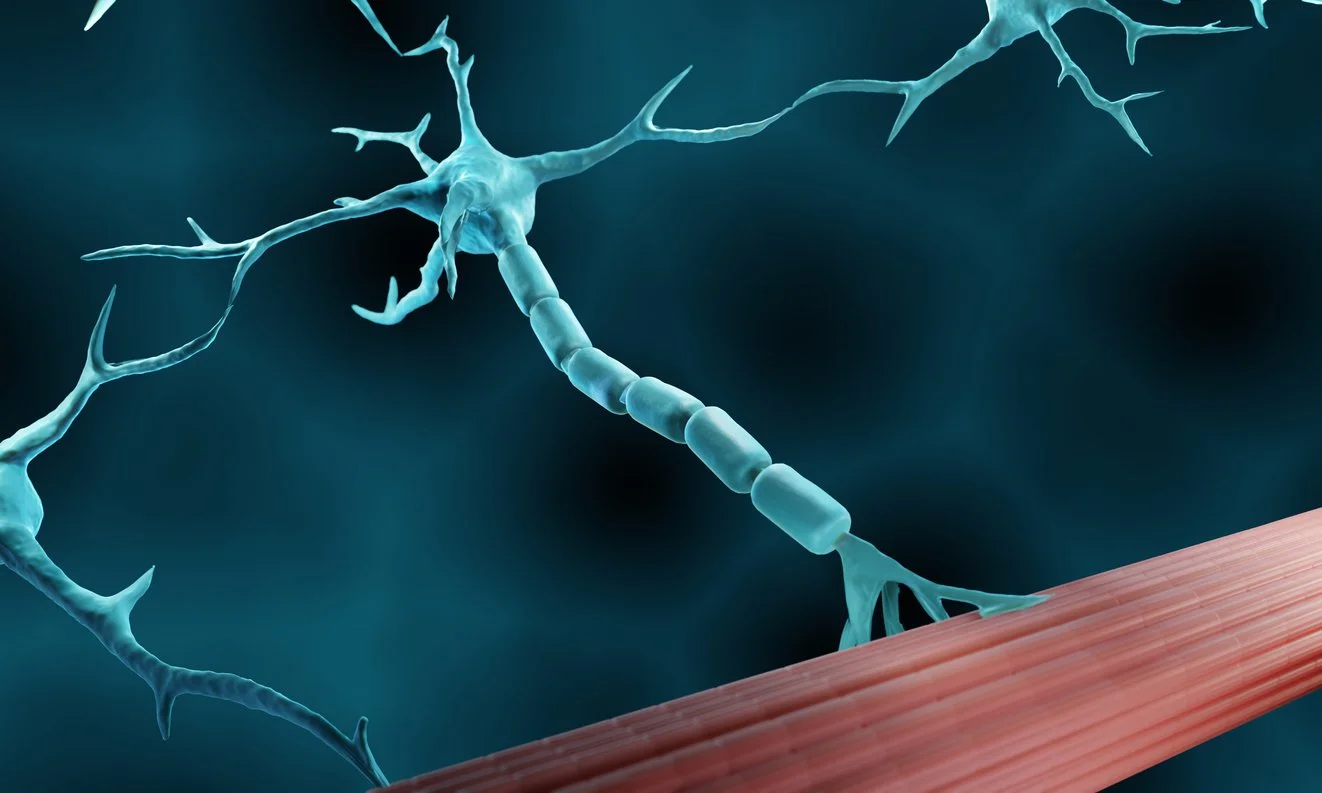
Injected Botox is locked within muscle cells within a few minutes.
Once the toxin has been taken inside the nerve ending, its fate is effectively determined. It is working at a microscopic level inside the cell. Lying down, bending over, having a shower or accidentally touching your forehead isn't going to pull it back out again.
In practical terms, by the time you have put your coat on and left the clinic, there is surprisingly little you can do to interfere with your treatment.
So let's look at some of the instructions patients are commonly given.
Can I Lie Down After Botox?
One of the most persistent pieces of Botox advice is that patients must remain upright for four hours after treatment. There is no convincing clinical evidence that doing so improves the result or reduces the risk of complications.
Furthermore, let us consider the specific complication practitioners most want to avoid, that of upper eyelid droop (ptosis), caused by downward spread of toxin towards the muscle that lifts the eyelid. Keeping the head upright theoretically increases rather than decreases the tendency for toxin spread downwards under the effect of gravity. The instruction makes no mechanical sense and has no scientific basis.
We stopped routinely telling our patients to remain upright after Botox many years ago. If you want to lie down after treatment, there is no good evidence that doing so will spoil your result. However, not lying flat is still widely advised. Even the prestigious Cleveland Clinic still advocates keeping your head elevated.
Can I Exercise After Botox?
There is no reason to believe that going for a run or visiting the gym will cause properly injected botulinum toxin to migrate around your face.
But strenuous exercise increases blood flow to the skin, which is why your face often becomes flushed during exercise.
You have just had several small injections. Increasing blood flow to those injection sites could potentially make bruising more likely or make an existing small bruise worse.
For that reason, we generally suggest avoiding strenuous exercise for the remainder of the day. It isn't because exercise will stop the Botox working. It is simply a sensible precaution to minimise bruising.
Can I Shower After Botox?
Yes. An ordinary shower isn't going to affect your Botox.
Again, however, there is a reasonable argument for avoiding anything that produces marked facial flushing immediately after injections.
So we suggest avoiding very hot showers, baths and saunas for the rest of the day.
The distinction matters. We aren't worried that heat will somehow deactivate the Botox inside your face. We are simply trying to minimise unnecessary increased blood flow around freshly injected areas with a possible increase in bruising.
Can I Touch or Rub My Face?
Accidentally touching your forehead after treatment isn't going to ruin your Botox.
There is no clinical evidence that ordinary touching causes botulinum toxin to move from one muscle to another.
We nevertheless suggest that patients avoid vigorously rubbing or massaging the injected areas for the first couple of hours.
Partly this is common sense. There may be tiny injection sites and occasionally a little swelling or bruising, and there is simply no reason to manipulate them immediately afterwards.
But this is a sensible precaution, not something to become anxious about. If you absent-mindedly rub your forehead on the way home, you haven't ruined your treatment.
Can I Have a Facial After Botox?
This is another area where tradition has rather overtaken science.
Patients regularly tell us that they have been advised to avoid facials for one week, and sometimes two weeks, following Botox.
We can find no convincing scientific basis for a blanket one or two-week restriction.
Once botulinum toxin has bound to the nerve ending and been internalised, a facial performed days later isn't going to extract it from the nerve cell or push it into another muscle.
We wouldn't recommend vigorous manipulation of freshly injected areas immediately after treatment. But a conventional facial a day or two later will not interfere with a well-performed Botox treatment.
Should I Move the Muscles After Botox?
This is perhaps the most interesting part of the story.
Muscle activity increases activity at the junction between the nerve and muscle, and there is a biologically plausible argument that this could encourage uptake of botulinum toxin into the nerve ending.
One study involving treatment of enlarged masseter, or chewing, muscles found a greater and more prolonged reduction in the treated muscles when patients deliberately increased their chewing activity afterwards.
That is intriguing because it suggests that, at least in this particular situation, using the treated muscle may potentially enhance rather than impair the effect of the toxin.
But we need to be careful not to turn one preliminary finding into another Botox aftercare rule.
The evidence isn't sufficient for us to tell everybody to spend the afternoon deliberately frowning or raising their eyebrows after treatment.
For masseter treatment, encouraging chewing afterwards may have a reasonable scientific basis. For routine upper-face Botox, whether deliberately exercising the muscles makes a clinically meaningful difference remains uncertain.
It is nevertheless a fascinating reminder that some of the traditional instructions surrounding Botox are based more on repetition than evidence.
Can Taking Zinc Make Botox Last Longer?
There has also been interest in whether taking zinc supplements before treatment might improve or prolong the effect of botulinum toxin. There is a genuine scientific reason for asking the question, botulinum toxin is a zinc-dependent enzyme.
An early study reported surprisingly impressive results from taking zinc combined with phytase, an enzyme intended to improve zinc absorption. A later small clinical trial also suggested a benefit.
However, the original study attracted significant methodological criticism, and the overall evidence remains limited. Reviews of the available research have therefore concluded that there isn't currently enough evidence to recommend routine zinc supplementation simply to make Botox last longer.
So the idea isn't nonsense but neither is it established enough for us to recommend it routinely.
So What Should You Actually Do After Botox?
Our advice is remarkably simple. Carry on with your normal day.
Try not to vigorously rub or massage the injection sites for the first couple of hours. If possible, avoid strenuous exercise, very hot baths, showers or saunas for the rest of the day, primarily because these may encourage bruising.
Otherwise, there is remarkably little you need to do.
You don't need to spend four hours carefully remaining upright. You don't need to worry about bending down to tie your shoelaces. And you certainly shouldn't spend the rest of the day frightened that one wrong movement will send your Botox somewhere it shouldn't go.
Good Aftercare Should Be Based on Science
Aesthetic medicine contains plenty of traditions that have been handed from practitioner to practitioner until they become accepted as fact.
Aftercare instructions are no exception. They should be based on robust science and not anecdotal evidence.
That doesn't mean aftercare isn't important. It means that the advice we give should have a sensible reason behind it. Good Botox aftercare shouldn't leave patients frightened that one wrong movement will ruin their treatment.
For most people, the best advice after a straightforward Botox treatment is reassuringly simple, carry on with your usual activities.
On a related theme, read why a follow-up appointment is important after anti-wrinkle injections.
For more information about the treatment itself, read our Anti-Wrinkle Treatment page.
The Science Behind Our Advice
Our approach is informed in part by the published work of botulinum toxin scientist Dr Andy Pickett, who has written specifically about persistent myths surrounding the clinical use of botulinum toxin.
Pickett A. Continuing Myths About Botulinum Toxin Use in Aesthetics Are Unhelpful and Unnecessary. Aesthetic Surgery Journal. 2019;39(5):NP150–NP151. https://doi.org/10.1093/asj/sjy300
Talarico S et al. Are Post-Care Recommendations Following Upper-Face Botulinum Toxin Treatment Scientifically Necessary? A Retrospective Study Based on 5000 Patients. Toxins. 2025;17(8):372. https://pmc.ncbi.nlm.nih.gov/articles/PMC12390119/