
Can My Sun-damaged Skin Be Improved?
The Answer Is YES - and More Than You Might Think.
Years of UV exposure leave a mark. But the clinical picture for patients with existing photodamage is considerably more encouraging than most people realise.
The question patients rarely ask — but should
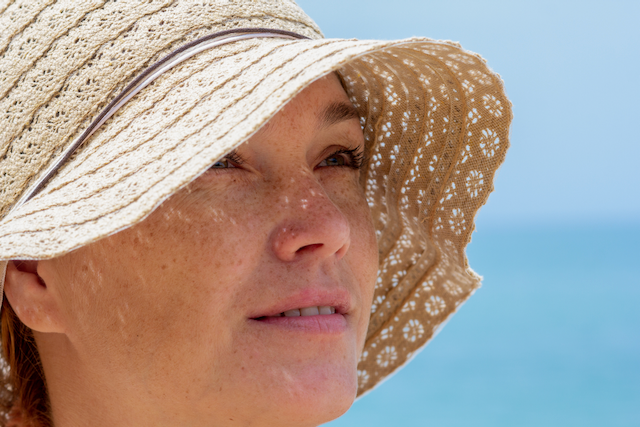
Most conversations about sun damage focus on prevention, wear your SPF, avoid peak UV hours, protect your skin before damage occurs.
All of that is correct and important. But it leaves unanswered a question that a significant number of patients are actually sitting with namely “I didn't protect my skin the way I should have. What can be done now?”
The answer is more encouraging than most people expect. Not everything can be reversed and saying so clearly is part of the conversation.
But a meaningful proportion of photodamage responds well to available treatments, and the combination of approaches now available is considerably more effective than it was even a decade ago.
Thinking about photodamage in layers
Photo-damage is not a single thing. It encompasses several distinct changes at different levels of the skin, and each has a different potential for improvement. Thinking about them separately produces a more useful picture than treating sun damage as one undifferentiated problem.
The main components are
Surface changes — pigmentation, texture, and uneven tone
Structural changes in the middle dermis, principally collagen loss
Deeper architectural damage known as solar elastosis
Accumulated DNA changes in skin cells that cannot be reversed but can be monitored and managed.
We looked at sun-damage in our blog post What does UV radiation actually do to your skin?
Surface changes — the most reversible
The most encouraging news is for the changes most visible on the surface. Irregular pigmentation — sun spots, uneven tone, diffuse discolouration — responds well to a range of treatments.
Retinoids normalise the way skin cells produce and distribute pigment, producing progressive improvement with consistent use. Chemical peels accelerate surface cell turnover and lift pigmented cells from the outer layers. Laser and light-based treatments target melanin directly, often producing rapid and significant improvement in sun-induced pigmentation.
We explore the role of Retinoids in our recent post The Facial Skincare Ingredient That Nothing Has Yet Replaced
Skin texture, the coarsening and thickening that accumulates with chronic UV exposure also responds well to retinoids and resurfacing treatments. The clinical and histological evidence for retinoid-induced improvement in epidermal architecture is robust and well-established.
Collagen loss — partially reversible
The loss of dermal collagen that UV radiation drives over time, through the matrix metalloproteinase pathway can be partially addressed, though complete restoration is not achievable.
Learn more about Collagen -What It Is, Why You Lose It, and Why It Matters for Your Skin
Retinoids do not simply slow further collagen loss. They actively stimulate fibroblasts to produce new collagen in photodamaged dermis, a distinction that matters clinically.
A 2025 study demonstrated progressive and statistically significant reversal of photoageing signs over 180 days of retinoid use in patients with moderate to severe photodamage, with histological evidence of genuine structural improvement.
Biostimulatory treatments — Sculptra, Profhilo, and Polynucleotides — add collagen-stimulating benefit through mechanisms independent of the UV damage pathway. The combination of these approaches, used in the right sequence, produces the most significant structural improvement currently available.
Solar elastosis — the hardest target
“Solar elastosis” is the deeper architectural damage in which abnormal elastic material accumulates in the dermis, producing deep wrinkles, laxity, and a dull complexion. It is the most resistant component of photodamage to treatment. Complete reversal is not currently achievable. Meaningful clinical improvement is.
Ablative fractional CO2 laser produces the most significant remodelling of solar elastosis, with histological evidence of partial reduction in the abnormal material and its replacement with more normally organised tissue. A 2025 systematic review confirmed that device-assisted therapies consistently improved visible photoageing outcomes and skin elasticity, with selective histological remodelling of solar elastosis.
What cannot be reversed
Accumulated DNA damage in skin cells, the mutational burden that results from decades of unrepaired UV-induced lesions is not reversible. The risk of further mutations decreases significantly when rigorous photoprotection is adopted, and the body's own DNA repair mechanisms work more effectively when ongoing UV exposure is reduced.
Actinic keratoses, the visible and clinically significant consequence of accumulated DNA damage can and should be treated and monitored. But the underlying susceptibility of chronically photodamaged skin to UV-related change persists, and regular skin checks remain important.
The practical approach
For a patient with existing photodamage, the most effective strategy combines several layers:
A retinoid — the single most comprehensively evidenced topical treatment for both preventing further photodamage and actively reversing existing changes. Start low, go slow, and maintain it consistently.
Biostimulatory injectables such as Sculptra, Profhilo, or polynucleotides add structural collagen-stimulating benefit that topicals alone cannot achieve.
Rigorous ongoing SPF is non-negotiable. Every treatment applied to photodamaged skin is undermined by continued unprotected UV exposure. The SPF is not a background detail. It is the intervention that makes everything else work. Read How Do I Choose a Sunscreen?
A reason for genuine optimism
The patient who spent years in the sun without protection, and who is now looking at the consequences, has genuinely useful options. Significant improvement in surface appearance and partial restoration of structural collagen are achievable goals with the treatments available today. Complete reversal of all photodamage is not, and saying so is part of a conversation worth having.
The message is this: it is not too late.
Start protecting now. Start treating where treatment is warranted. And expect meaningful improvement, delivered over time, with the right combination of evidence-based approaches.
References
Leonforte F et al. Preventive and Therapeutic Interventions in Solar Elastosis and Photoaging: A Comprehensive Systematic Review. Biomedicines. 2025;13(11):2758. https://pmc.ncbi.nlm.nih.gov/articles/PMC12650578/
Kohl E et al. The role of topical retinoids in the treatment of photoaging. PubMed. 2005. https://pubmed.ncbi.nlm.nih.gov/15907143/
Mambwe B et al. Cosmetic retinoid use in photoaged skin: A review of the compounds, their use and mechanisms of action. International Journal of Cosmetic Science. 2025;47(1):45–57. https://pmc.ncbi.nlm.nih.gov/articles/PMC11788006/