
The Cosmeceutical Trendy Topicals — What the Evidence Actually Says
New skincare ingredients arrive with apparently impressive science and impressive marketing in roughly equal measure. Here is a guide to the most prominent ones and the question worth asking about all of them.
We will look at the following cosmeceutical ingredients that are receiving the most publicity and social media attention :
Growth factors
Peptides
Exosomes
PDRN
NAD+ and precursors
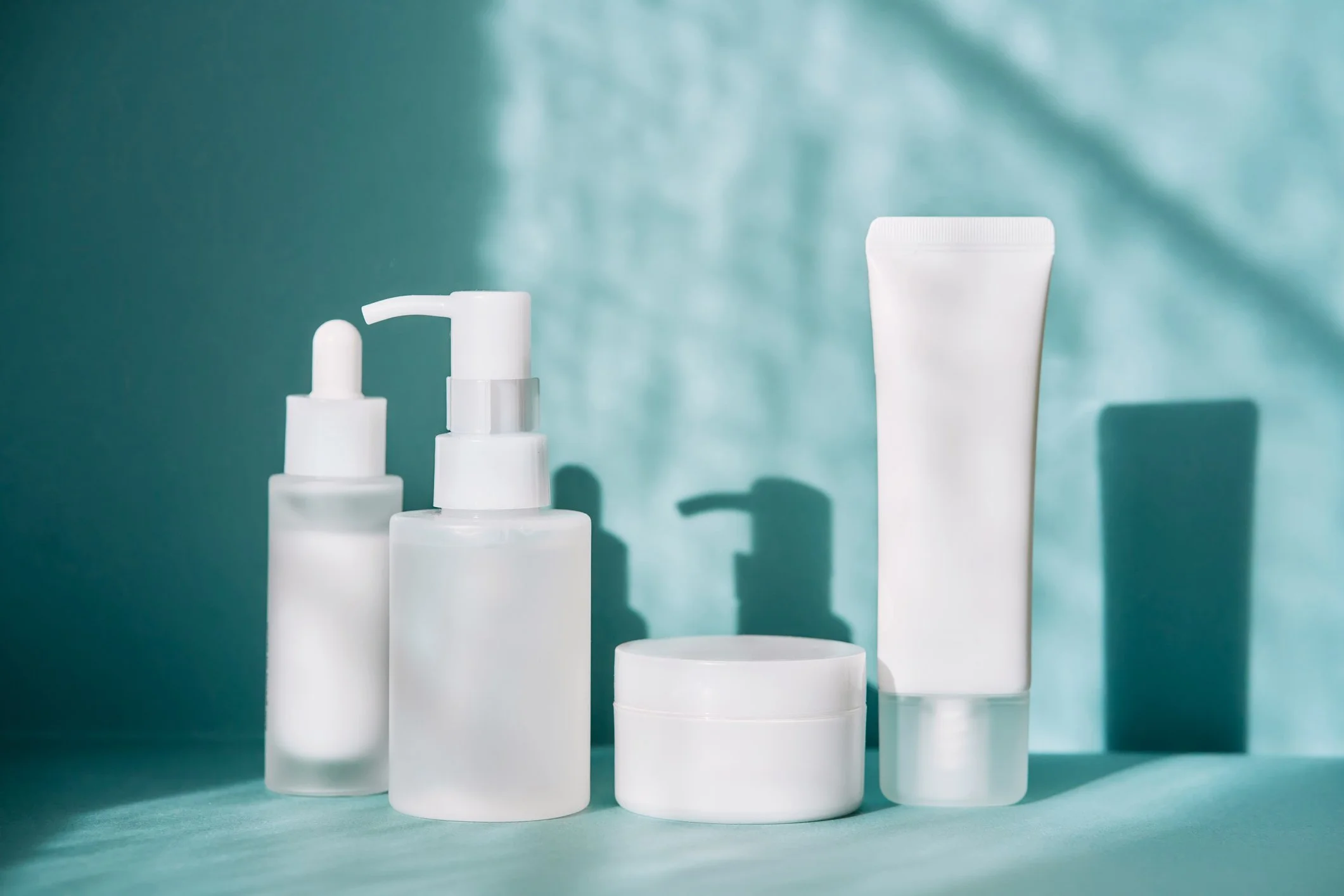
The term "cosmeceutical" sits between a cosmetic and a pharmaceutical product.
A word worth defining first
The term "cosmeceutical" sits between a cosmetic and a pharmaceutical — a product that claims biological activity beyond simple moisturisation or cleansing, but which is regulated as a cosmetic rather than a medicine. The category includes many genuinely useful ingredients. It also includes a great deal that is considerably better marketed than it is evidenced by science. Understanding the difference is what this piece is about.
The question that precedes everything else
Before examining any ingredient on its own terms, one question matters more than any other does it actually penetrate the skin barrier in a biologically active form, in sufficient concentration, to reach the tissue where it is supposed to work?
The stratum corneum, the outermost layer of the skin, is a remarkably selective membrane. Molecules larger than approximately 500 Daltons struggle to penetrate it under normal conditions. Many of the ingredients currently being marketed as advanced topical therapies are considerably larger than this.
We take a look at the skin barrier here.
The skin penetration question is not a minor technical footnote. It is the central clinical issue and the one most conspicuously absent from most product marketing.
Growth factors
Growth factors, epidermal growth factor (EGF), transforming growth factor beta, fibroblast growth factor, are endogenous proteins that regulate cell proliferation, collagen synthesis, and wound healing. Their biological relevance to skin ageing is real and well documented.
The challenge is size. Most growth factors are considerably larger than the 500 Dalton skin penetration threshold, which means that standard topical application to intact skin delivers relatively little to the dermis where it could do useful work.
The evidence for post-procedure application, following microneedling or laser treatment, when the barrier is temporarily disrupted is considerably more defensible. Applied in that context, growth factor serums have a genuine clinical rationale. Applied to uncompromised skin, the evidence is thinner and the claims more speculative.
Peptides
Peptides are short chains of amino acids, smaller and more structurally flexible than intact proteins, that act as signalling molecules, stimulating collagen production or influencing muscle activity depending on their sequence.
Their smaller molecular size makes barrier penetration more achievable, and the evidence base for certain well-studied peptides is reasonably solid.
Signal peptides such as palmitoyl pentapeptide have a credible body of in vitro and clinical evidence supporting collagen-stimulating effects. Neurotransmitter-inhibiting peptides claim to reduce expression lines by interfering with muscle contraction, a plausible mechanism, though considerably less potent in practice than the botulinum toxin they are sometimes compared to in marketing materials.
Peptides are a legitimate and useful category. The evidence is real but modest, and formulation quality matters considerably for whether the active ingredient reaches its target.
Exosomes
Exosomes are nano-scale vesicles secreted by cells, carrying growth factors, signalling molecules, and genetic material. Their biology is genuinely fascinating and their role in injectable post-procedure recovery is a rapidly developing area with real scientific credibility.
As a topical ingredient, the picture is more complicated. Whether topically applied exosomes penetrate the skin in sufficient quantities to exert a meaningful effect on dermal fibroblasts and whether they remain biologically active after the manufacturing and formulation process are questions the clinical literature has not yet answered satisfactorily.
PDRN (Polydeoxyribonucleotide)
Polynucleotides have a well-developed injectable evidence base, which we examine in a dedicated piece elsewhere on this blog. However, with the related PDRN as a topical ingredient, the molecules are considerably larger than the standard penetration threshold making application after microneedling — when the barrier is temporarily disrupted — the most scientifically defensible delivery context. Yet again it comes down to the question as to whether topical PDRN serums and creams penetrate intact skin in useful quantities.
NAD and NMN
The NAD+ precursors, nicotinamide riboside and nicotinamide mononucleotide, have attracted considerable interest based on their role in cellular energy metabolism and DNA repair. The systemic evidence is genuinely interesting. Whether topically applied versions reach mitochondria in viable skin cells in clinically meaningful concentrations is not established to the standard the marketing implies. An area to watch rather than invest heavily in on current evidence.
The conclusion worth holding onto
The ingredients described here range from genuinely promising to modestly evidenced to purely speculative. What almost all of them share is a marketing presentation that does not adequately distinguish between laboratory data, early clinical observations, and established peer-reviewed scientific evidence.
The skin barrier post and the retinoid post elsewhere on this blog provide the scientific foundation for evaluating these claims critically. The barrier determines what gets in. The retinoid evidence sets the standard against which newer ingredients should be measured. Neither conclusion is particularly convenient for the skincare industry. Both are supported by fifty years of clinical research.
References
Quinlan DJ et al. Topical growth factor preparations for facial skin rejuvenation: A systematic review. Journal of Cosmetic Dermatology. 2023. https://onlinelibrary.wiley.com/doi/10.1111/jocd.15644
Skin rejuvenation using cosmetic products containing growth factors, cytokines, and matrikines. Clinical, Cosmetic and Investigational Dermatology. 2016. https://www.dovepress.com/skin-rejuvenation-using-cosmetic-products-containing-growth-factors-cy-peer-reviewed-fulltext-article-CCID
Ash M et al. The Innovative and Evolving Landscape of Topical Exosome and Peptide Therapies: A Systematic Review. Aesthetic Surgery Journal Open Forum. 2024. https://pmc.ncbi.nlm.nih.gov/articles/PMC11023079/